
A Simple Classroom Management Plan for K–3 Teachers
You’ve noticed where the day gets difficult, tried a clearer response, and practiced a routine with your students. Now you need a way to keep those pieces together when the week gets busy. A classroom management plan for K–3 can begin with a few useful decisions about one part of your day. You should be able to glance at it and know what you’re working on.
Welcome to the final part of The Classroom Management Reset: Small Changes for Calmer K–3 Classrooms. Over the past four posts, we’ve worked through choosing a focus, responding to everyday situations, managing classroom noise, and teaching routines. This week, we’ll bring those ideas into a plan you can use, review, and adjust as you learn more about what your students need.
Start with the moment you want to improve
Think back to the part of the day you chose at the beginning of this series. Is it getting easier, or does the same difficulty keep returning? Write down what you can actually see. “Several students are still sorting materials when the carpet lesson begins” gives you a clearer starting point than “Transitions are a mess.”
For our example, let’s stay with the move from table work to the carpet. You’ve noticed children waiting at the folder tray, stopping to talk, and asking what to do when they arrive. Choose the part that is causing the most difficulty. You may decide to begin with putting folders away because the backup there affects everything afterward.
Keep the rest of your classroom expectations in place while you give this routine extra attention. This focused plan fits alongside your school’s procedures and any individual supports students already use. You can add another focus later, once you have a better sense of what helped with this one.
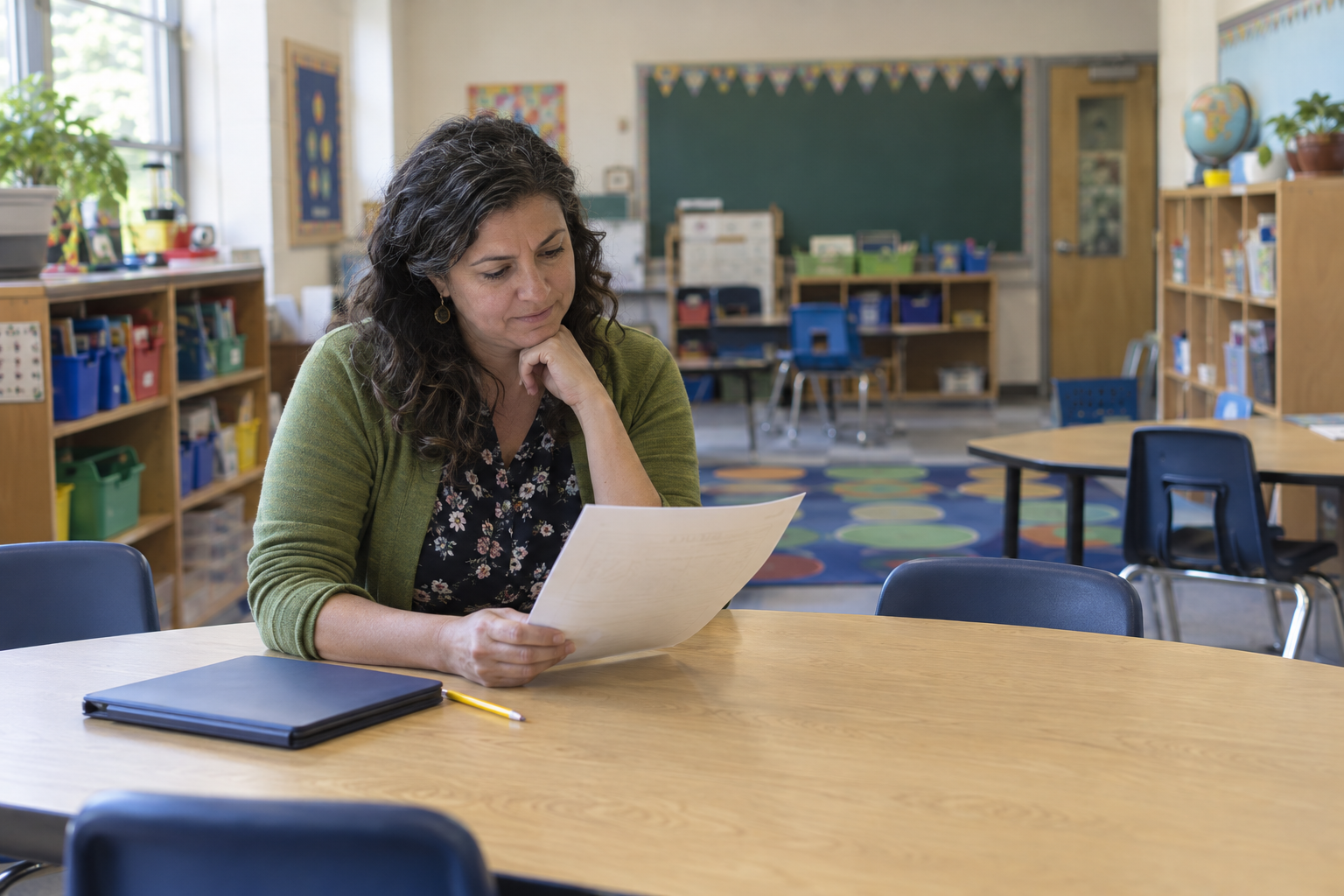
Describe what students will do
Write the routine in a few clear steps. For our table-to-carpet example, students will close their folders, place them in the tray, tuck in their chairs, and walk to a carpet space. Decide what happens to unfinished work and what children do while waiting for the rest of the class.
Include the voice expectation where it matters. You might explain, “If you need help at the tray, use a voice the person beside you can hear. When you reach the carpet, look at the picture on the board.” Choose words that fit the activity and that you’re comfortable repeating during a busy transition.
I would check the plan from a child’s perspective before moving on. Can students reach the tray? Is there room to tuck in a chair while someone walks past? Do they know which picture to look at? A direction is easier to follow when the room and materials support the steps you’ve described.
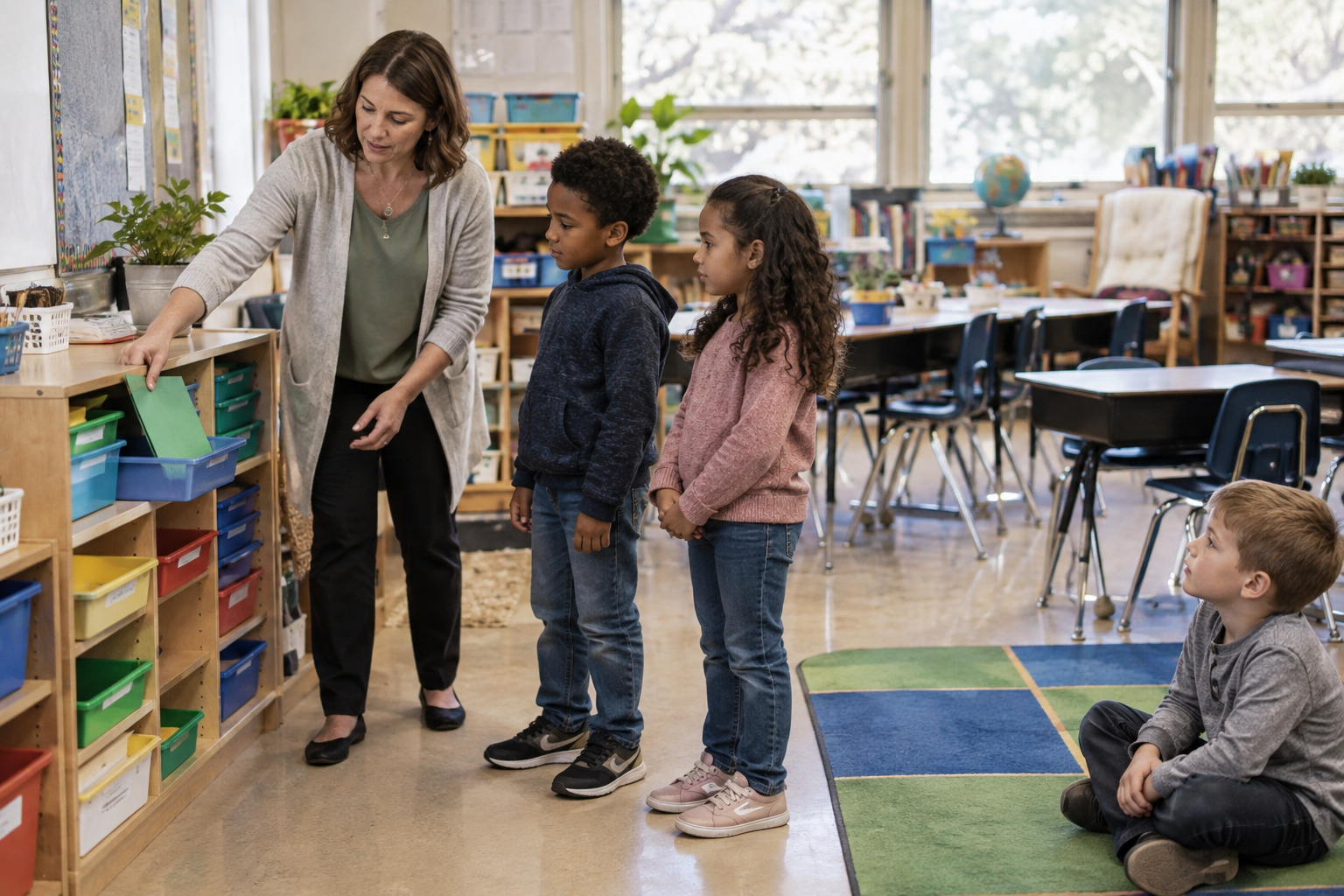
Choose the change you’ll make before teaching
Use what you observed to decide whether the setup needs an adjustment. If the tray is crowded, you might release one table at a time or place a second tray where another group can reach it. If students keep returning to ask about unfinished papers, give those papers a clear home inside the folder.
Write down the adjustment you’re going to try first. Keep it manageable enough that you can prepare it before the routine happens again. You don’t need to rearrange the whole classroom to find out whether moving one tray helps children get through that part of the transition.
If another adult supports the routine, share the change and the language you’ll use. A quick conversation about where folders go and what children do next can help you give consistent directions. Make sure any substitute notes reflect the routine once you’ve settled on a version that works.
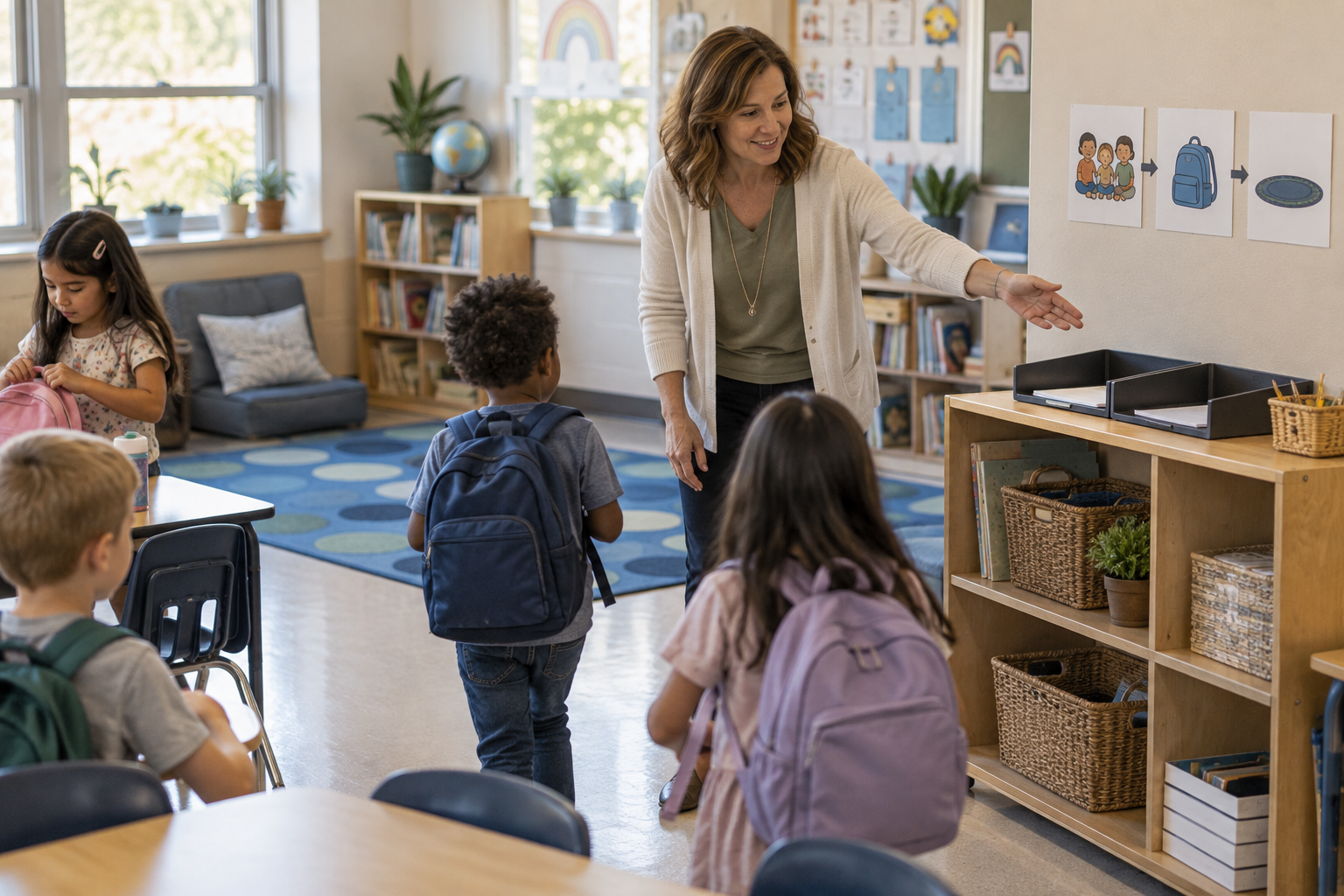
Plan a short teaching moment
Choose when you’ll demonstrate the routine, using the same materials and route students will use. Before table work begins, you might say, “Today I’m going to show you where our folders go and what happens next.” Walk through the steps slowly enough that children can notice the details.
Then give students a brief chance to try. Watch the part that was difficult and offer specific feedback: “You put your folder away and moved toward the carpet. That left space for the next person.” If the tray still creates a backup, adjust the setup before asking everyone to practice again.
Add a reminder to your plan for the next real transition. That might be pointing to a picture cue and naming the first step before students begin. As children become familiar with the routine, notice whether they can use the cue without you talking them through every action.
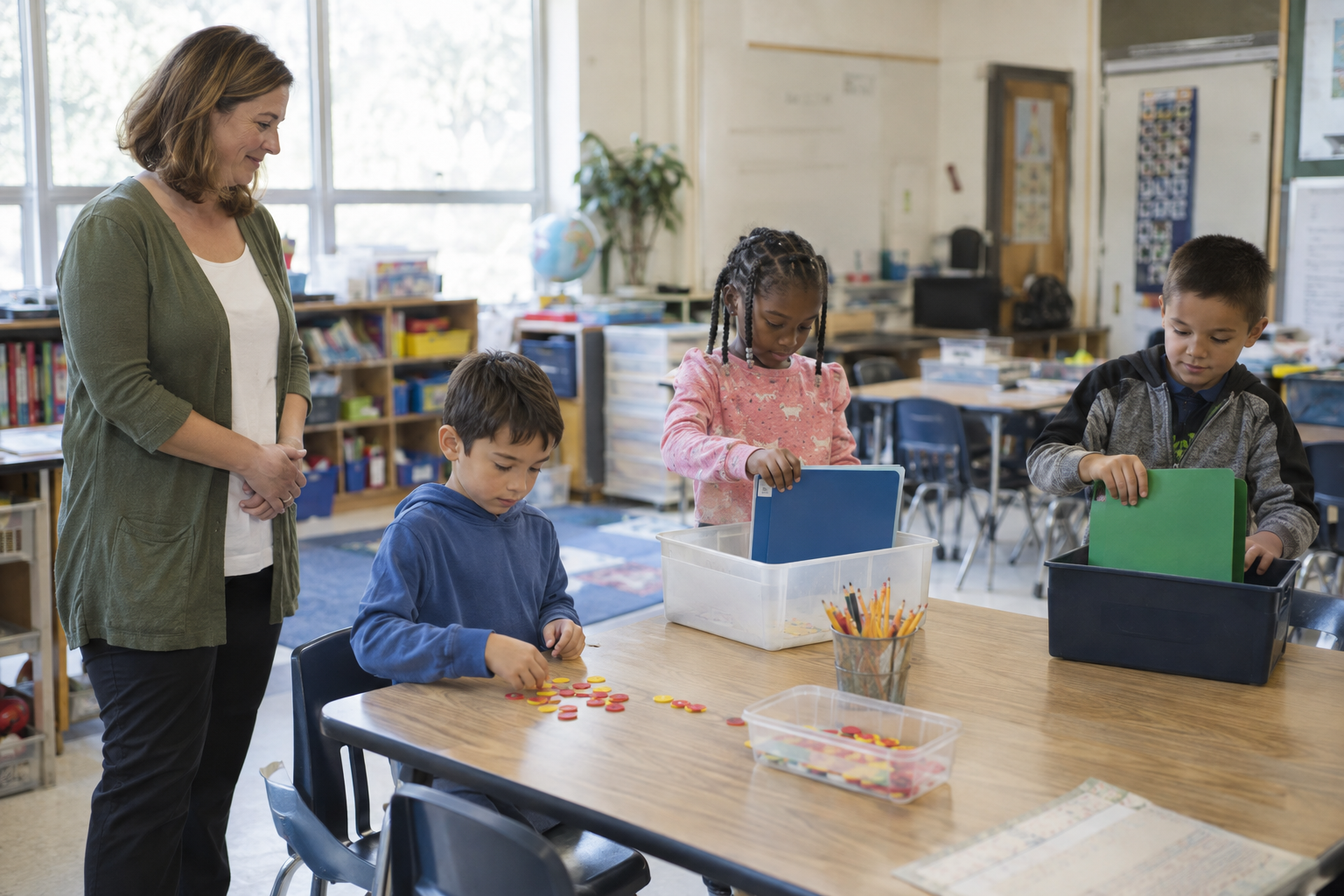
Decide how you’ll respond when someone gets stuck
Think about the response you’ll use while the rest of the class continues. For a student still at the table, you might quietly say, “Close your folder and take it to the tray. Then come to your carpet space.” Give the child a moment to respond and check whether the direction was enough.
If the child seems unsure, help with the difficult step. They may need you to show how papers fit inside the folder or point out the correct tray. If they understand but are caught up in a conversation, moving closer and giving a brief cue may help them return to the routine.
Leave room in your plan for individual support. A child who regularly struggles may need more time, a picture cue at the desk, or help organizing materials. Follow the supports already in place and share repeated difficulties with the appropriate school team. Your notes about the specific step can help that conversation stay focused.
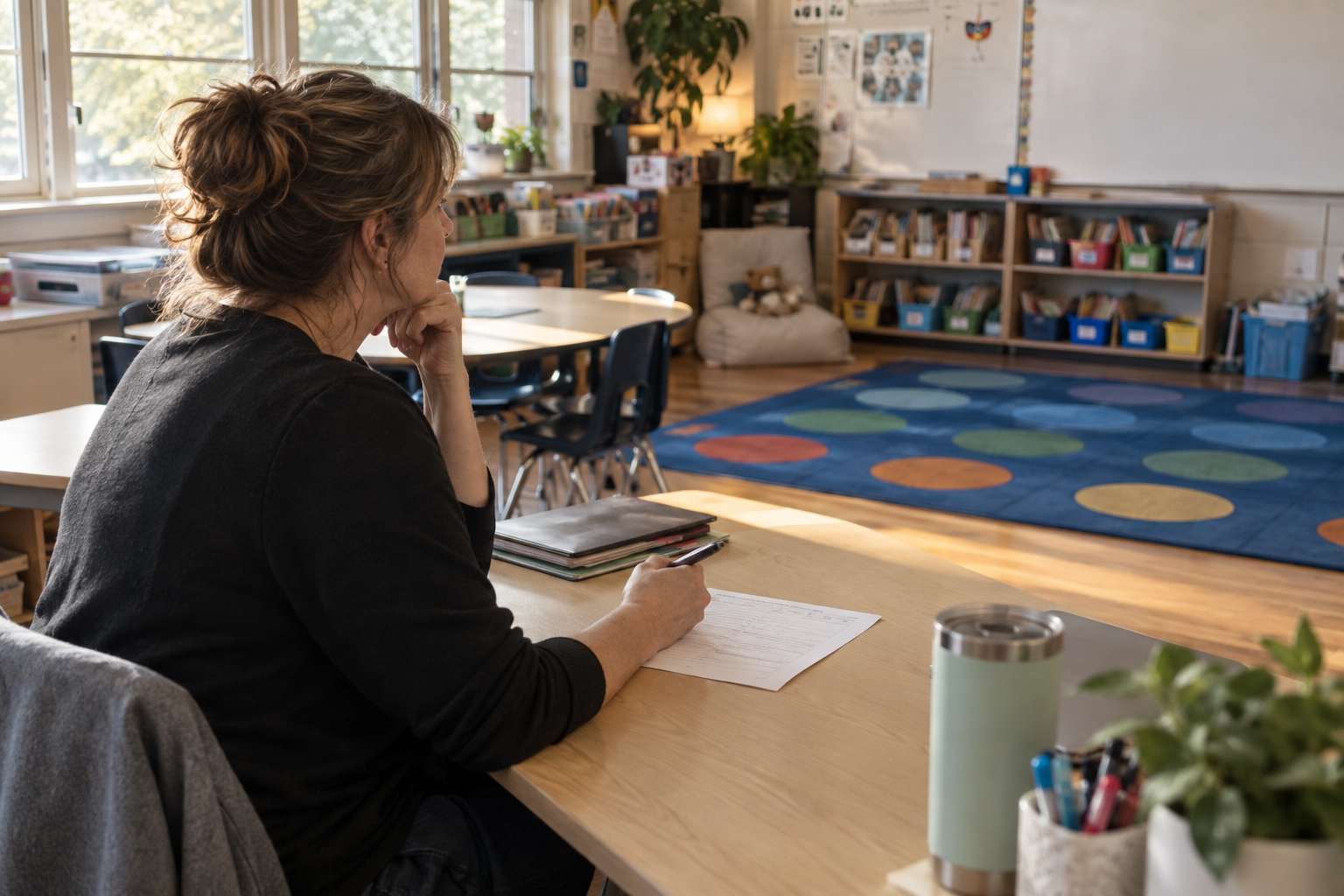
Put the decisions on one page
Bring your notes together under a few simple headings: the moment, the expected steps, the setup change, the teaching, the response, and the review date. Give each heading a short entry. Keep the page somewhere you can check during planning so the decisions are easy to use throughout the week.
For our example, the entry might read like this: “After math, students put folders in the tray and come to the carpet. I’ll call one table at a time, model the route, and have a picture ready for students to study when they arrive. I’ll stand near the tray and give a quiet cue or help with the folder step when needed. On Friday, I’ll check whether the waiting and repeated questions have decreased.”
That gives you a plan you can try without needing to write a response for every possible situation. Add a detail when it helps you teach or support the routine. If a note doesn’t help you decide what to do, you can keep the page simpler.
Review what happened and choose your next step
After a few days, return to the difficulty you named at the beginning. Were fewer children waiting at the tray? Did they know what to do when they reached the carpet? Did you give fewer reminders? A quick note after the transition can help you remember more than the busiest moment of the week.
Keep what helped and choose one adjustment for what still needs work. If folders are going away smoothly but students are unsure what to do at the carpet, focus your next teaching there. Once the routine is more settled, you can use the same planning process for another part of the day.
As we finish this series, choose one decision you’ll put into practice tomorrow. Your observations, clear directions, brief teaching, and thoughtful responses give you a way to keep improving the classroom you already have. For practical support as you continue, join The Teacher Cue Weekly Classroom Note, my free newsletter for primary teachers.
WANT A LITTLE MORE SUPPORT EACH WEEK?
Get The Teacher Cue delivered to your inbox every Tuesday.
One real classroom moment. One practical response. Exact words you can use. No fluff.
Click Here: SEND ME THE TEACHER CUE →

💛 Lauren
Read Next:
Why Students Don't Follow Directions the First Time (and What to Do Instead)
If you're repeating the same directions all day, start here. Learn five small shifts that can make your directions easier for K–3 students to hear, understand, and follow.


