
Managing Classroom Noise in K–3: Simple Ways to Lower the Volume
You send students off to work with a partner, and for a few minutes, everything sounds fine. Then one table gets louder, another group starts talking across the room, and you find yourself raising your voice just to remind everyone to lower theirs. If managing classroom noise is wearing you out, I want you to think about the moment the volume begins to change. That gives us somewhere useful to start.
In the first two parts of The Classroom Management Reset: Small Changes for Calmer K–3 Classrooms, we looked at choosing a focus and responding to everyday classroom situations. This week, we’re working on helping children understand what the room should sound like during different activities. There is room for conversation, questions, and excitement while still making it possible for students to hear and work comfortably.
Decide what the activity should sound like
Before asking students to be quieter, think about what they need to do. Partner reading, building with blocks, and listening to a classmate share all involve different kinds of participation. If the expectation changes throughout the day, children need you to explain what fits the activity they’re beginning.
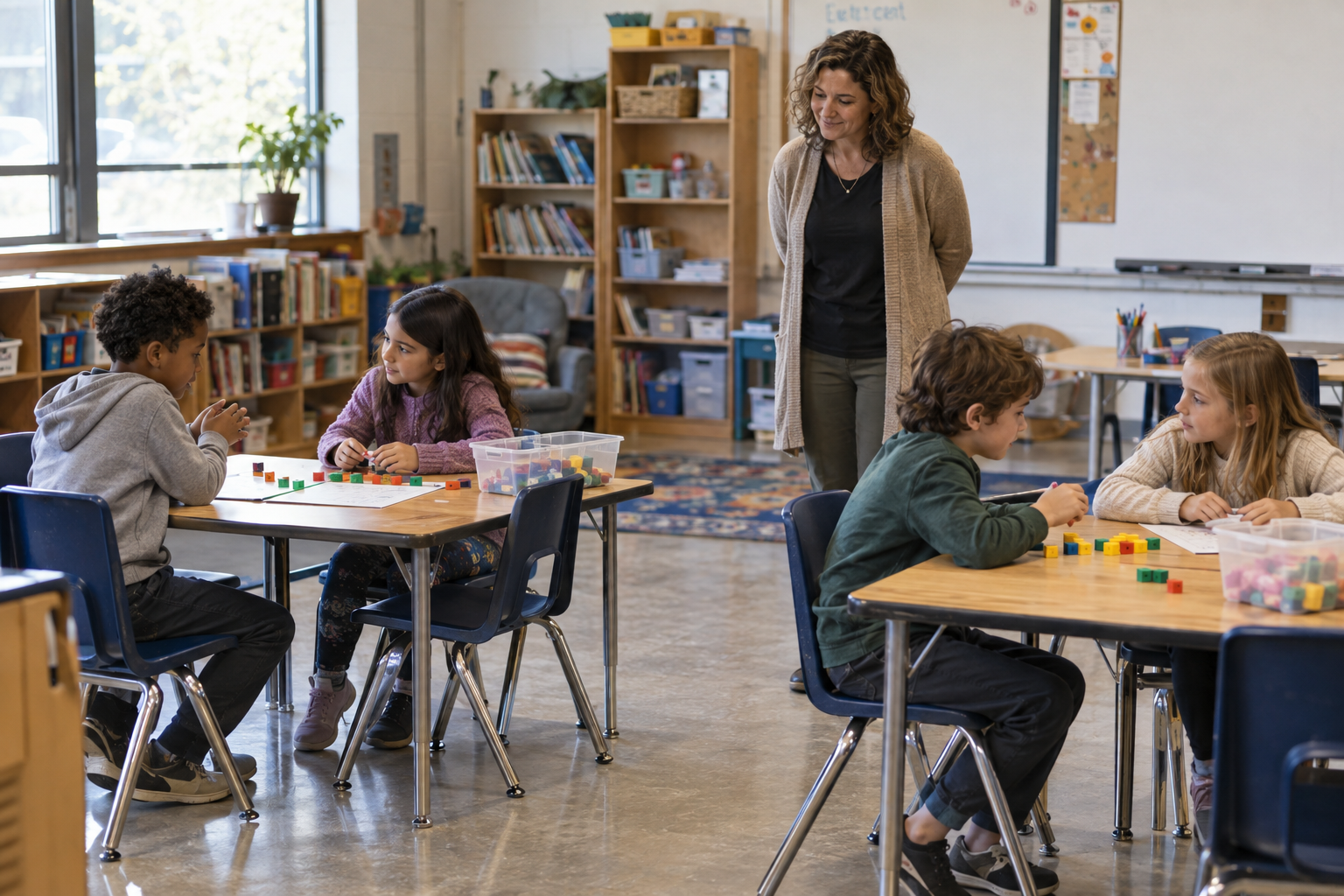
I would start with one time of day that regularly gets too loud. Maybe it’s math centers, when several groups are talking at once. Decide who children need to speak to and how close that person will be. Then put the expectation into words they can use: “During this activity, talk to the people at your table. If you need someone across the room, wait until you can speak to them nearby.”
Keep the direction specific enough that students know what to change. “Use a voice your partner can hear from the next seat” gives a child something to try. You can also ask yourself whether the task requires conversation. If you’ve asked children to explain their thinking, plan for the sound of those conversations.
Show students what a partner voice sounds like
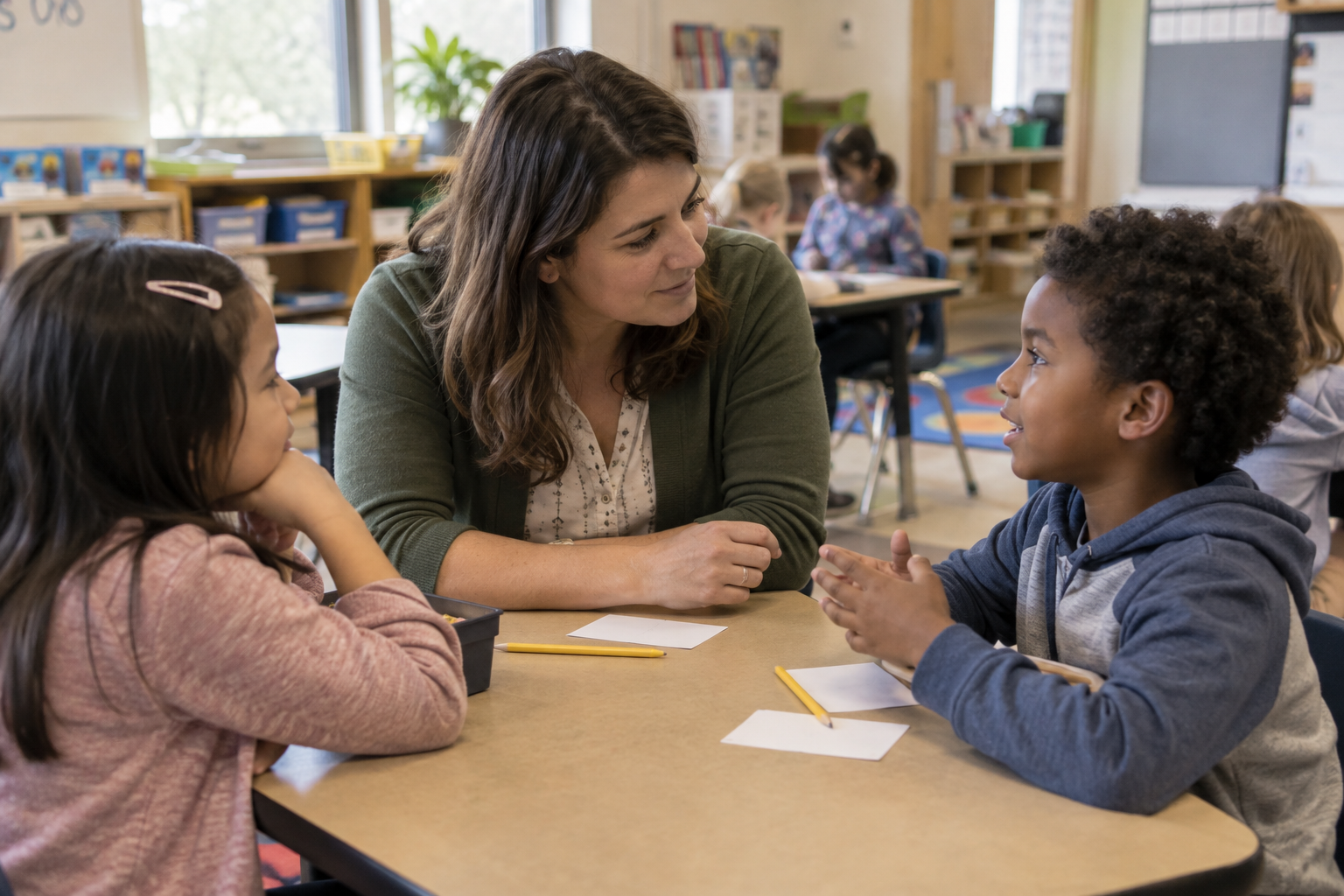
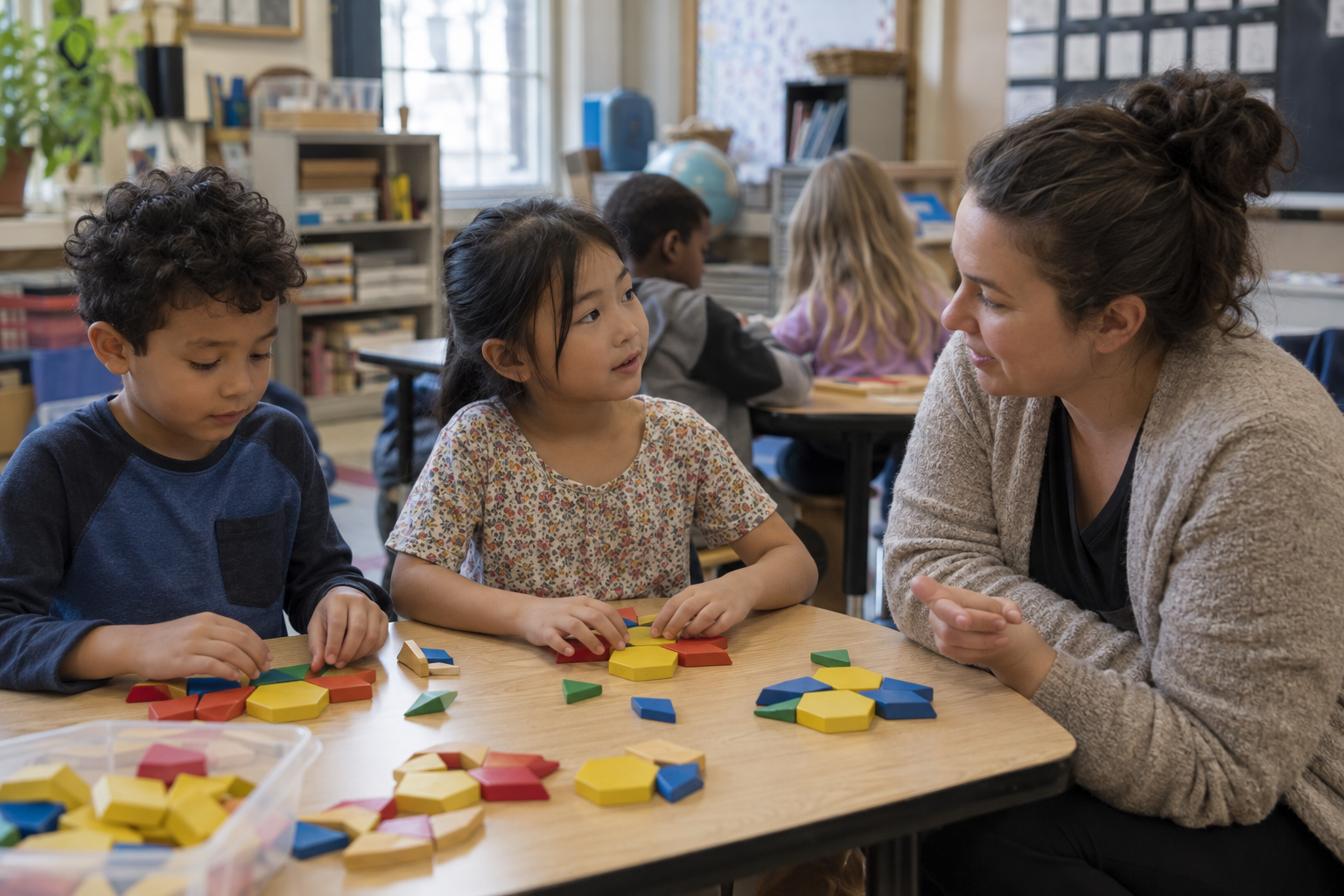
“Inside voice” can mean different things to different children. Before the activity begins, sit beside a student and demonstrate a short exchange at the volume you want. Use the actual task if you can: “I put these shapes together to make a rectangle. What did you make?” Then invite the class to notice who needed to hear you.
Give partners a brief chance to try with a simple question. Walk nearby and listen before asking them to begin the longer activity. If several pairs need help, model again from the distance they’ll actually be sitting. Whispering across a large table may be difficult, while a comfortable speaking voice works when partners sit closer together.
If you already use a voice-level chart, connect the picture or number to this demonstration. A chart is more useful when children have heard and practiced what each level means. Keep your wording consistent so they can connect today’s reminder to something they already know how to do.
Teach one signal for getting attention
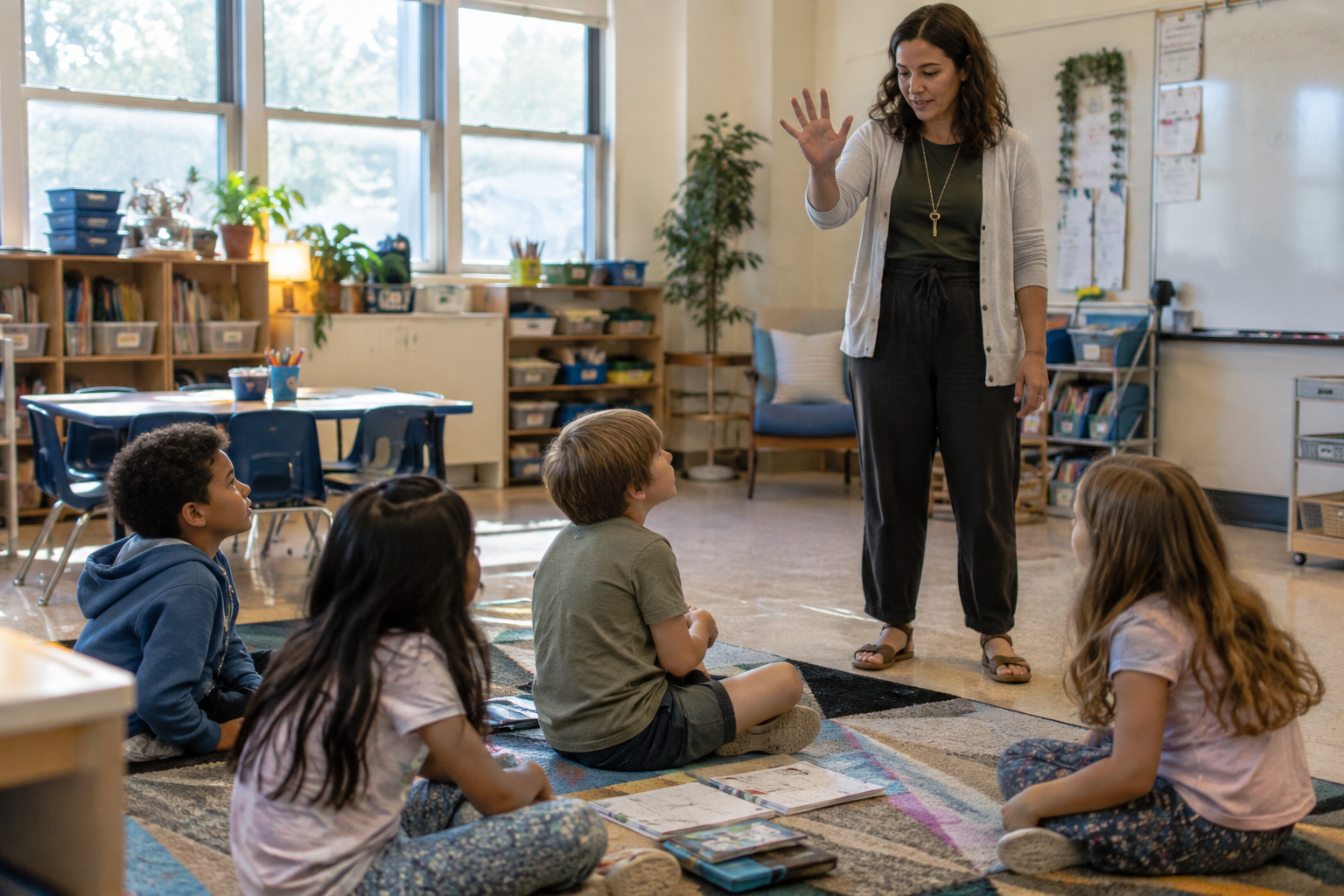
When the room gets loud, it’s tempting to keep adding reminders over the conversation. I would choose one familiar signal and teach the response during a calm moment. That might be a raised hand paired with a short spoken cue that students can notice from where they’re working.
Explain what happens next: “When you notice my signal, pause your conversation, rest your materials, and listen for the direction.” Demonstrate it, let students practice briefly, and explain how they’ll know they can return to work. Make sure the signal is accessible to your students and follows any individual supports they use.
When you need it during a lesson, give children time to respond before speaking. If a few students miss the cue, move closer and prompt them quietly. Starting your next direction while several groups are still talking can leave those students trying to catch up before they’ve even begun.
Respond to the group that needs help
If one table is getting loud while the rest of the class is working comfortably, begin at that table. You might say, “Your ideas are getting hard for each other to hear. Bring your voices back to your table.” Stay nearby for a moment so you can notice whether the reminder helps.
Sometimes the volume is telling you something about the activity. Children may be excited about a discovery, disagreeing over a turn, or calling for supplies they can’t reach. Listen long enough to decide what needs attention. A group waiting for one pair of scissors may need help sharing materials before another voice-level reminder will be useful.
When several groups are struggling, use your signal and give one clear adjustment: “We’re going to move closer to our partners and try that table voice again.” Keep the pause brief, then let them continue. Afterward, name what improved: “You moved closer, and now both of you can hear without calling across the table.”
Look at the sounds your room adds
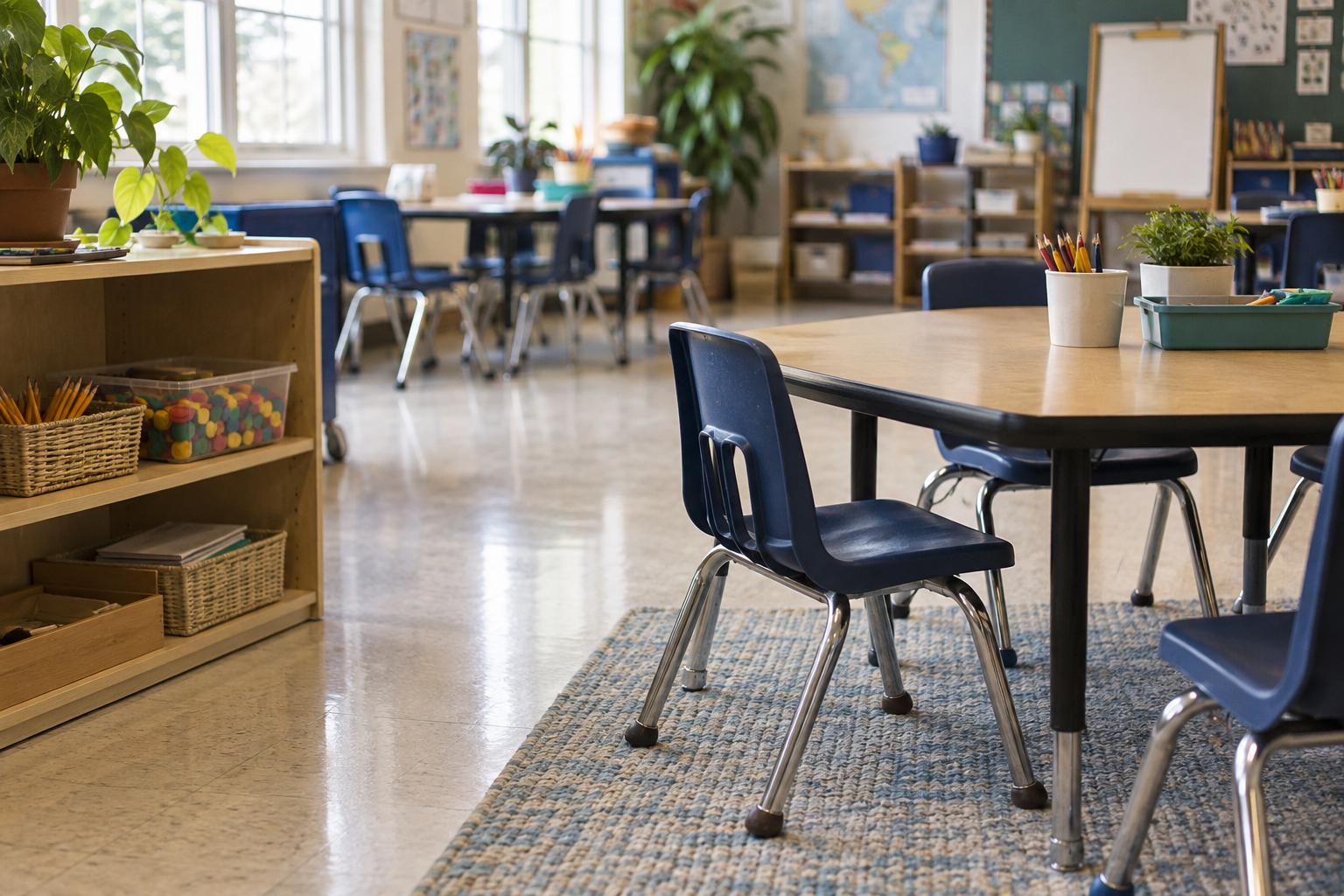
Spend a minute listening during the activity you chose. Notice the chairs scraping, bins being emptied, materials rattling, and children moving between work areas. Those sounds are part of the classroom experience, too, and some may be easier to adjust than the conversations themselves.
You might place a small mat beneath a bin of manipulatives, use suitable chair-leg pads, or teach children to set a supply basket down gently. If two talkative centers are crowded together, try giving them more space. Work with the room and materials you have, and choose an adjustment that addresses a sound you actually noticed.
Look for unnecessary waiting as well. When children finish early or can’t find what comes next, conversations can spread beyond the task. Have a familiar next step ready and make sure students can find the materials without calling across the room. That gives you another way to support the activity while you’re helping a small group.
Make room for individual needs
Pay attention to children who seem uncomfortable even when the class is using the expected voice level. A student may have difficulty concentrating near an active center or hearing a partner over nearby conversations. Ask what is making the work difficult and notice whether a different seat or a quieter workspace helps.
Keep that support connected to participation. A quieter place should still allow the child to access the task, ask for help, and work with classmates when needed. Follow the supports already in place and coordinate with your school team if the difficulty continues. You don’t need to solve every concern through a whole-class noise rule.
Try a classroom noise reset tomorrow
Choose one activity and plan the words you’ll use before it begins. Show the voice level, let students try it, and remind them of your attention signal. While they work, notice where the sound changes and whether the cause is conversation, materials, waiting, or confusion about the task.
At the end, ask whether students could hear their partners and whether you spent less time repeating reminders. Keep the part that helped and adjust one thing for the next day. An especially lively afternoon gives you more information about what needs practice; you can return to the same clear expectation tomorrow.
Next week, we’ll look at practicing classroom routines so students know what to do from the first step to the last. If you’d like practical support like this each week, join The Teacher Cue Weekly Classroom Note, my free newsletter for primary teachers.
Want More Practical Classroom Support?
You don't need 47 more classroom-management strategies. You need practical ideas you can actually use when you're standing in front of your students.
Join my weekly newsletter for simple K–3 classroom-management support, exact teacher language, and strategies you can put into practice right away.
Click Here: SEND ME THE TEACHER CUE →

💛 Lauren
Read Next
Why You Have to Repeat Every Direction Five Times
If it feels like your students don't respond until you've repeated yourself again and again, the problem may not be the direction itself. Learn the small habits that can accidentally teach students to wait for the second, third, or fifth reminder.


