What to Do When a Student Keeps Touching or Bothering Classmates
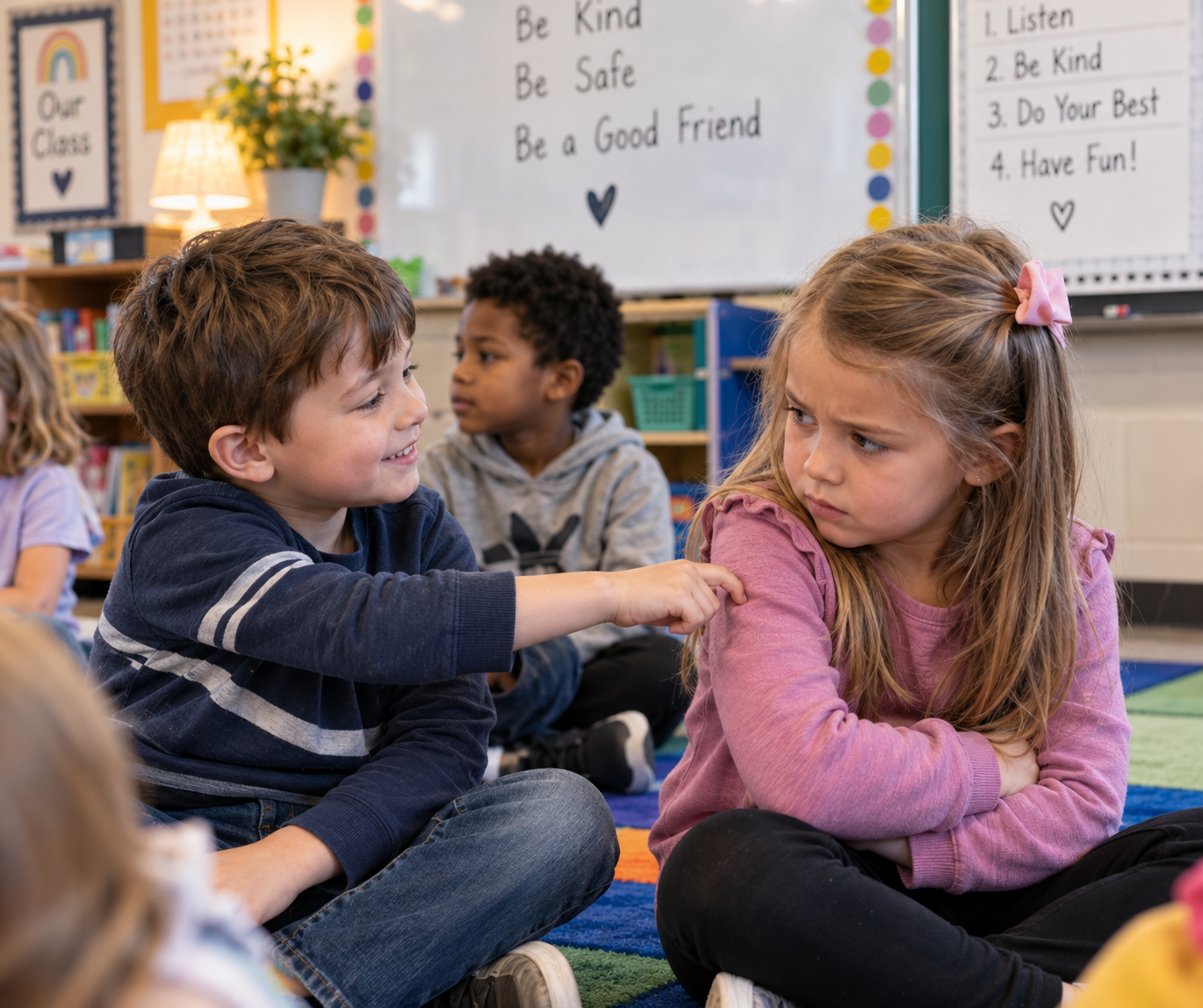
There’s often one student who seems to have a hard time keeping their hands, materials, or body in their own space.
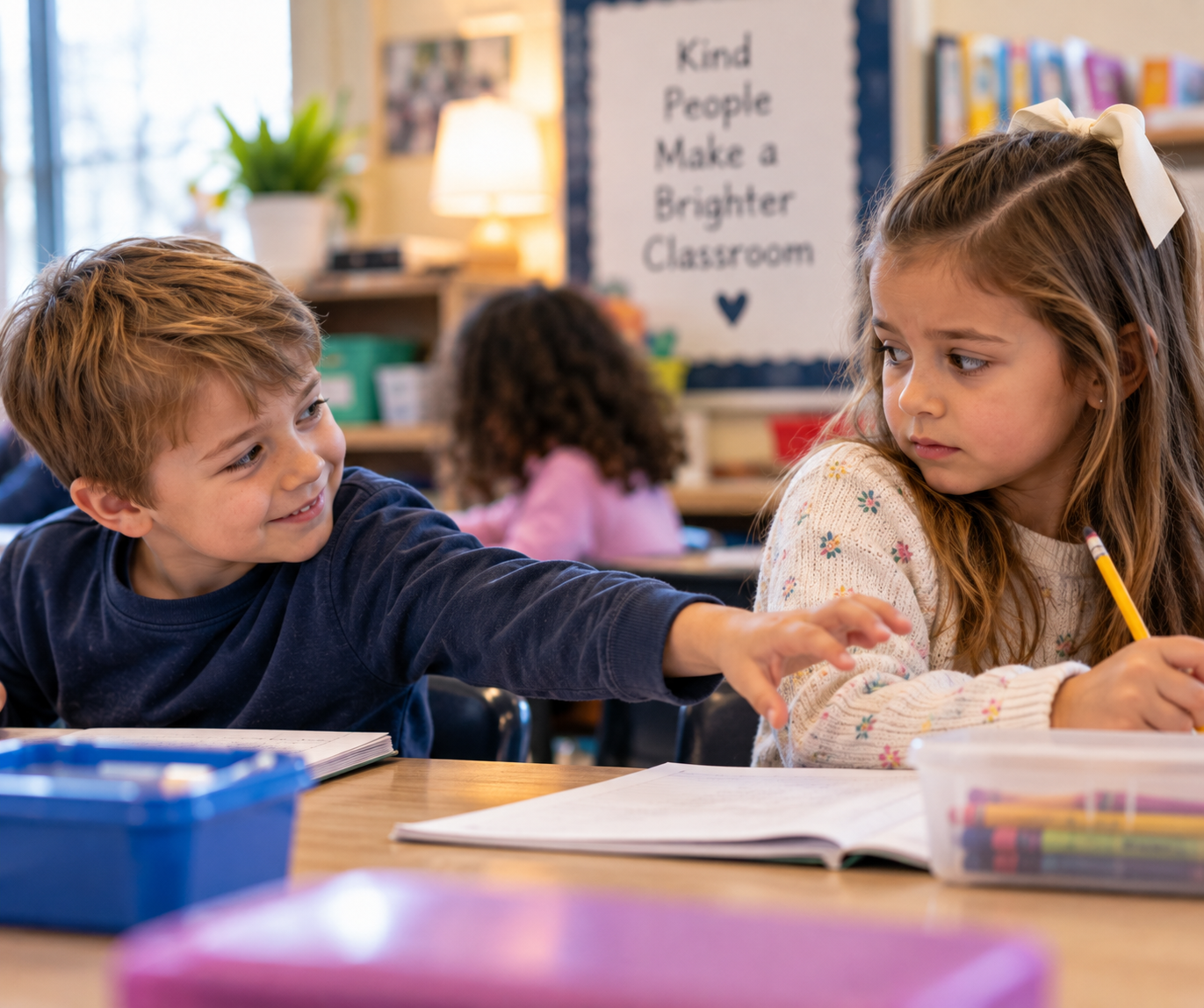
They tap the student beside them during a lesson. They poke someone in line. They reach across the table and grab a pencil that isn’t theirs. They lean into another student’s space even after being asked to stop.
You redirect them, and for a few minutes it seems better. Then it happens again.
When this becomes a pattern, it can be frustrating because you may feel like you’re giving the same reminder all day long: “Keep your hands to yourself.”
I would still hold that boundary, especially when another student is uncomfortable. But if the reminder isn’t changing the behavior, I’d start looking more closely at what’s happening before it.
Start with the boundary
If another student is being touched, poked, grabbed, or bothered, I wouldn’t make the response vague.
The student needs to know exactly what needs to stop.
You might say:
“Keep your hands in your own space.”
Or:
“She asked you to stop. Your hands need to stay with you.”
If materials are involved:
“That pencil belongs to him. Put it back and ask before you take something.”
The goal isn’t to embarrass the student or give a long lecture. You’re making the boundary clear and giving them an opportunity to follow it.
If anyone is being hurt or the behavior becomes unsafe, of course, safety comes first and you follow your school’s procedures for getting additional support.
Pay attention to when it happens
If this student is being redirected for the same thing over and over, I would start looking for a pattern.
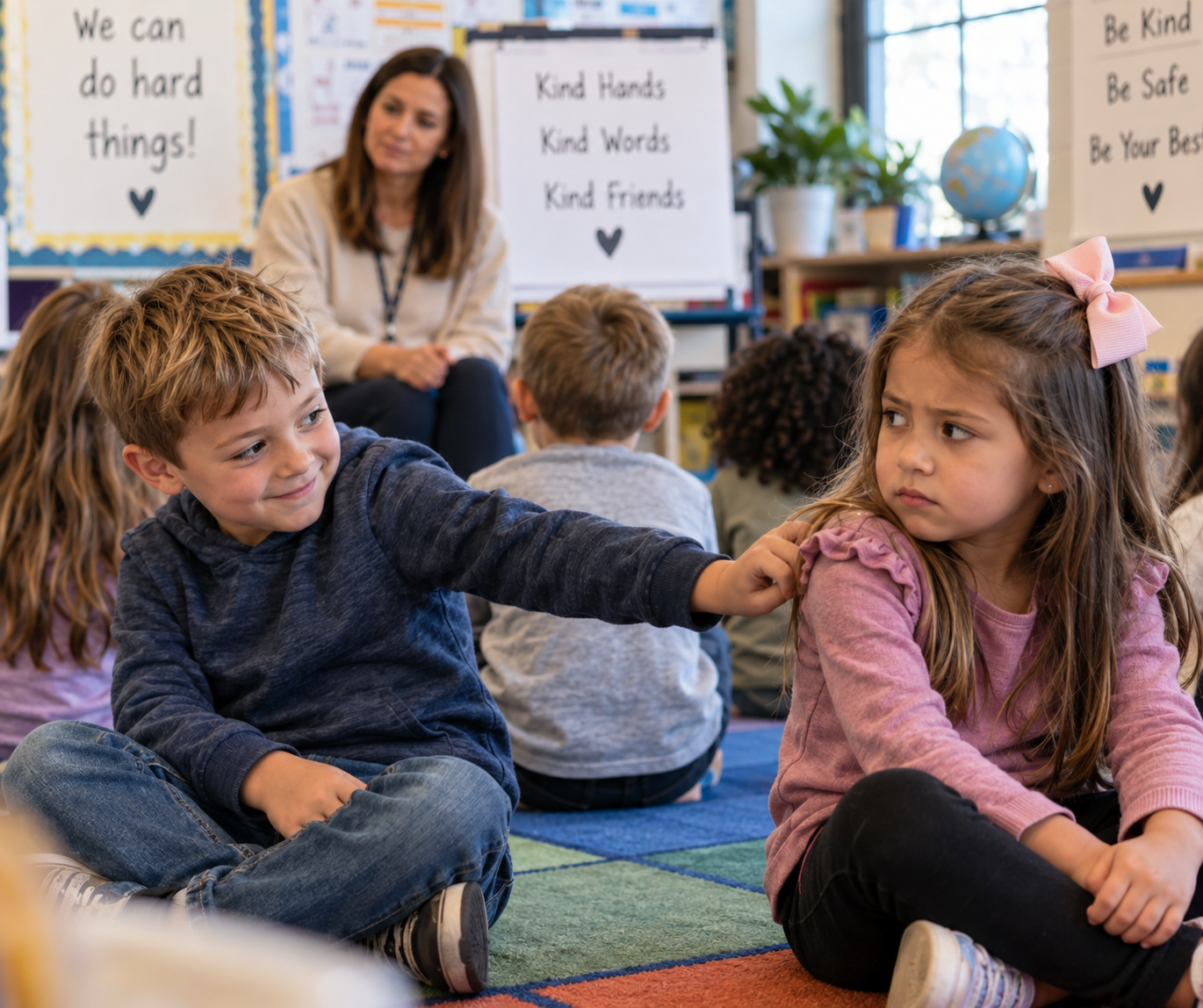
Does it happen mostly in line?
At the carpet?
When students are sitting close together?
During unstructured times?
When the student is excited?
When they’re trying to get another child’s attention?
Maybe they’re having trouble judging personal space. Maybe they don’t have a good way to enter play or conversation. Maybe certain parts of the day simply put them very close to other students for a long time.
You don’t have to decide exactly why the behavior is happening before you respond. But the pattern can help you decide what to teach next.
“Keep your hands to yourself” may not be enough
This is one of those phrases we use so often that we sometimes assume students know exactly what it means.
Some do.
Others may need something more concrete.
Instead of only saying:
“Keep your hands to yourself.”
you might say:
“Your hands can be in your lap or holding your own materials.”
In line:
“Leave one arm of space between you and the person in front of you.”
At the carpet:
“Stay inside your own spot.”
You’re giving the student something they can actually picture and do.
Teach them another way to get a classmate’s attention
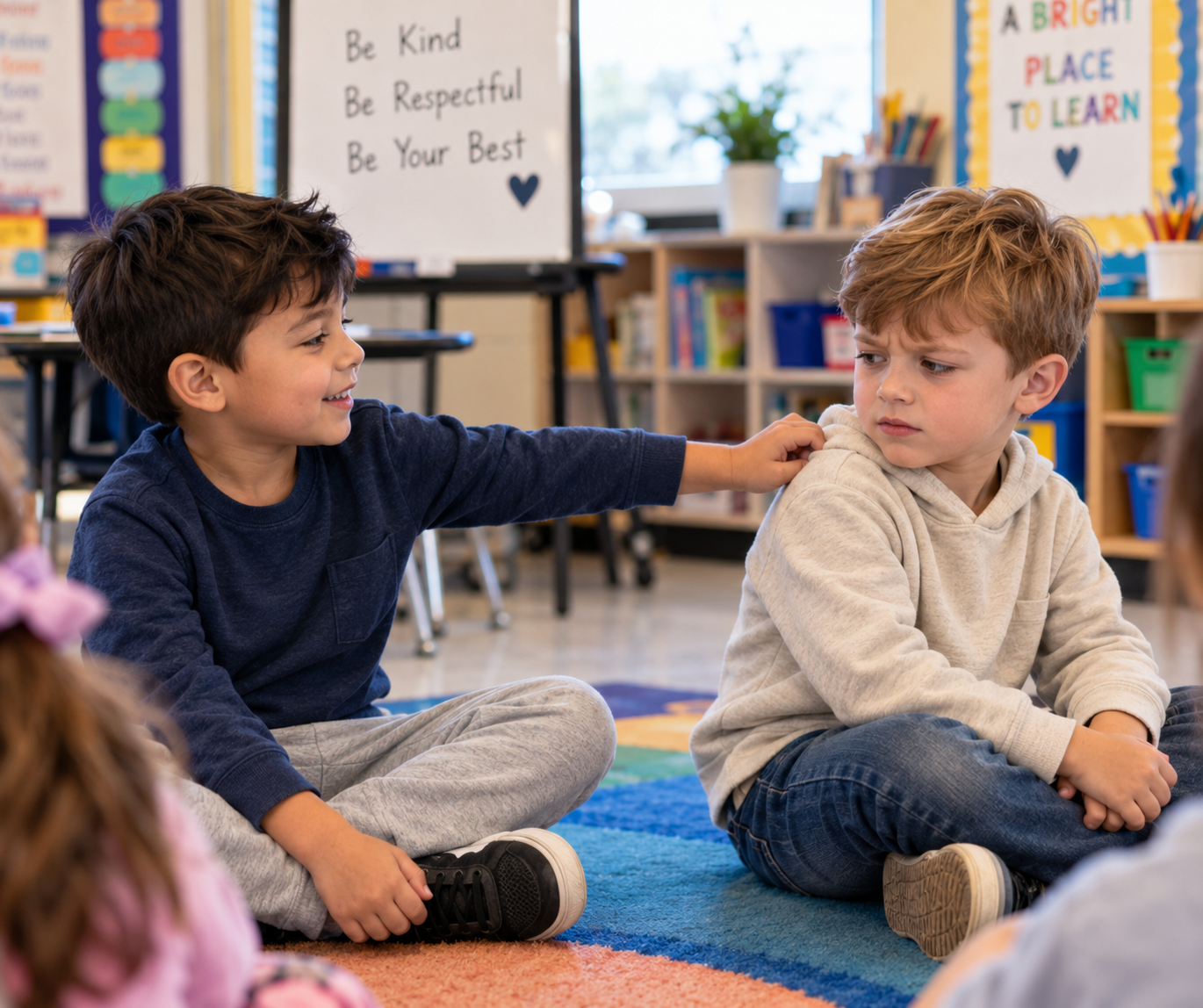
Sometimes touching or poking is the student’s way of saying, “Look at me,” “I want to play,” or “I need to tell you something.”
If that seems to be happening, teach the replacement behavior instead of assuming the child will come up with one.
You might say:
“If you want her attention, say her name. You don’t need to poke her.”
Or:
“Ask, ‘Can I play?’ instead of grabbing the toy.”
With younger students especially, this may take practice. Knowing what not to do is very different from knowing what to do instead.
Help the other student use their voice too
There’s another side to this situation.
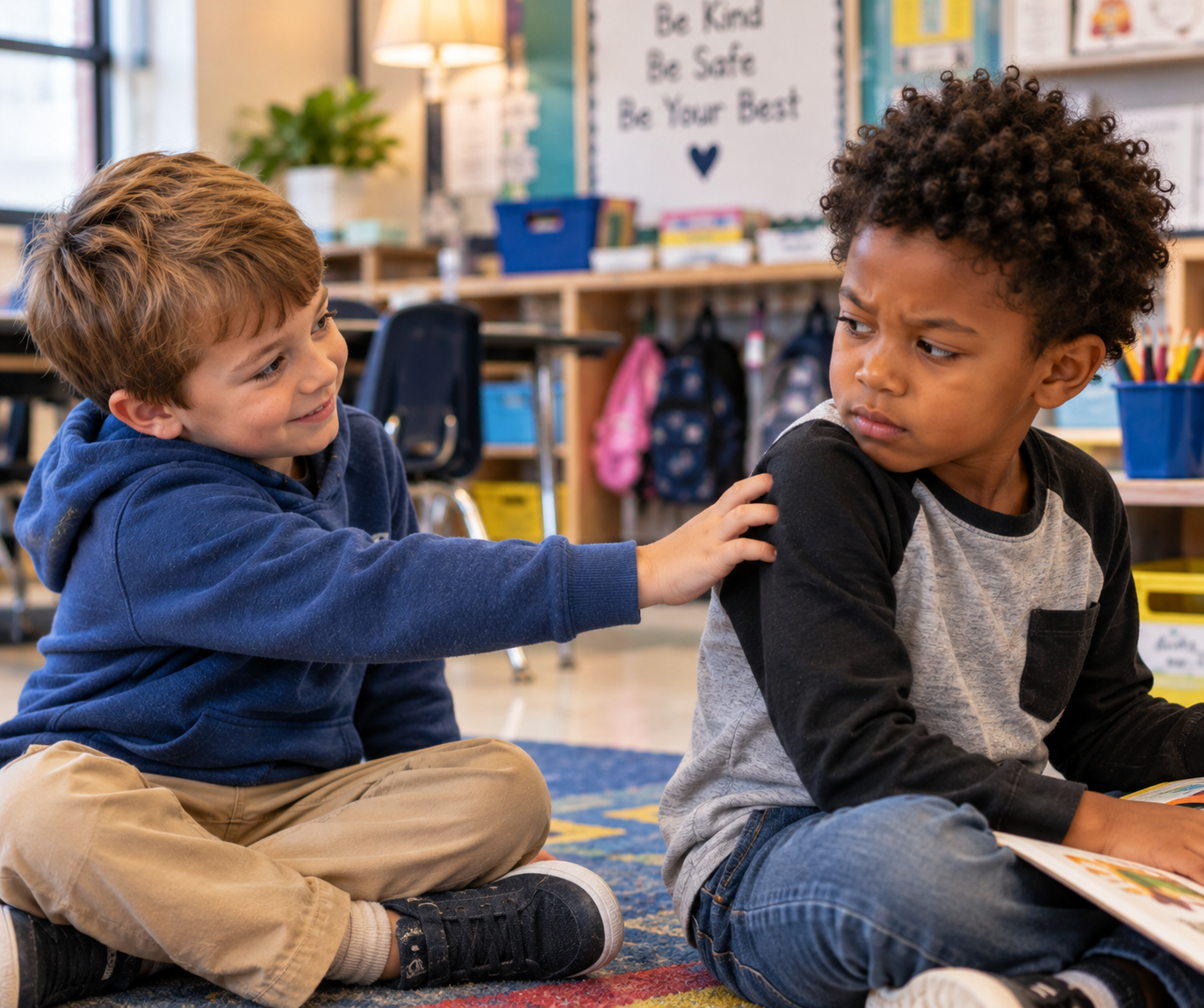
If a student is being touched or bothered and the situation is safe enough for them to speak up, we can give them simple language too.
They might say:
“Please stop touching me.”
“I need more space.”
“Don’t take that. I’m using it.”
That doesn’t mean the student being bothered becomes responsible for fixing the behavior. The teacher still steps in when needed.
But we can also help children learn how to clearly communicate a boundary.
If the student keeps doing it after being told to stop
This is where I would move beyond another identical reminder.
If you’ve already said, “Keep your hands in your own space,” three times during the same activity, simply saying it a fourth time probably isn’t giving the student anything new.
You might need to change the situation.
That could mean moving the student’s spot temporarily, increasing the space between students, having them stand somewhere different in line, or checking in privately before the part of the day when the behavior usually happens.
You could say:
“You’re having a hard time keeping your hands in your own space here. For now, you’re going to work at this spot so everyone has enough room.”
That keeps the response connected to the behavior without turning it into a punishment speech.

Come back to it when things are calm
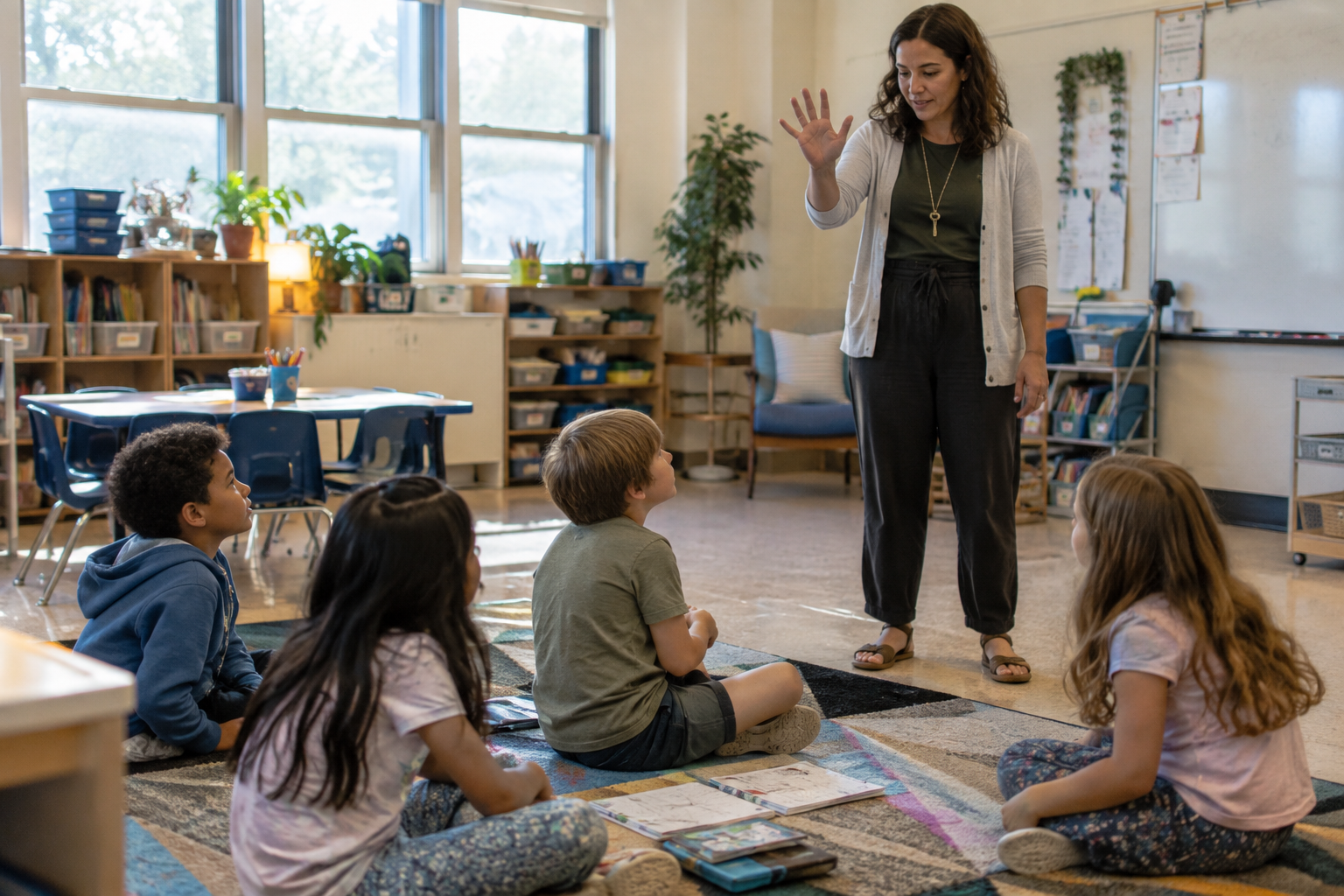
If this is becoming a regular problem, I would talk to the student outside of the moment.
You might say:
“I’ve noticed you’ve been touching other students a lot when we’re at the carpet. They’re asking you to stop, but it keeps happening. Let’s figure out what you can do instead.”
Then practice.
Where should their hands go?
How can they get someone’s attention?
What can they say if they want to join in?
Where can they sit if being very close to others makes it difficult?
Sometimes the student needs much more practice with the replacement behavior than we realize.
Try this tomorrow
If you have a student who keeps touching, poking, or getting into other students’ space, don’t just count how many times you have to correct them tomorrow.
Choose one part of the day when it happens most and watch what is going on.
Is the space crowded?
Are they trying to get someone’s attention?
Do they know what their hands should be doing?
Do they have another way to join the interaction?
Then teach that next step.
You can keep the boundary very clear while still helping the student learn what to do instead.
Read Next
What to Do When a Student Constantly Tattles
If you have a student who reports every small problem, the goal isn’t simply to make them stop coming to you. Learn how to help students decide when they need an adult and what they can try on their own first.
Want Practical Classroom Support Every Week?
Every Tuesday, I send The Teacher Cue, a weekly classroom note for K–3 teachers with practical strategies, exact teacher language, and ideas you can use without adding another complicated system to your day.
Join The Teacher Cue Newsletter →
Missed the Teacher Cue App Experience?
The October Teacher Cue App Experience has now closed.
If you’ve been reading these weekly classroom notes and thinking, “This is exactly the kind of help I need when something happens in my classroom,” that is what Teacher Cue was created to provide.
Teacher Cue gives K–3 teachers practical next steps and exact language for real classroom situations when you’re trying to decide what to do next.


