
Teaching Classroom Routines in K–3: Practice That Helps
You tell students to put their materials away and come to the carpet. A few children move right along, two are still deciding where their papers go, and someone stops at a friend’s table to finish a conversation. By the time everyone arrives, you’ve repeated the direction several times. Teaching classroom routines can feel frustrating when you know you’ve already explained what to do.
In this fourth part of The Classroom Management Reset: Small Changes for Calmer K–3 Classrooms, we’re looking at how to practice those everyday routines. We’ve already worked through choosing a focus, responding to classroom situations, and managing noise. Now let’s take one transition and make the steps clear enough for children to follow with less help from you.
Choose a routine you can describe clearly
Start with a moment you repeat most days, such as putting away math materials or getting ready for independent reading. I would choose something small enough that you can watch the whole routine from beginning to end. “Be ready to learn” covers a lot; “Put your folder away and come to the carpet” gives you a more specific place to begin.
Watch once before deciding what needs practice. Are children unsure where materials belong? Do they know what to do after putting them away? Is everyone trying to use the same narrow space? If the tray is difficult to reach, change that setup before asking students to rehearse the same struggle.
For this post, let’s use the transition from table work to the carpet. You can apply the same thinking to another routine, but stay with one for now. That will make it easier to notice whether your teaching is helping and which part still needs attention.
Make the beginning and ending clear
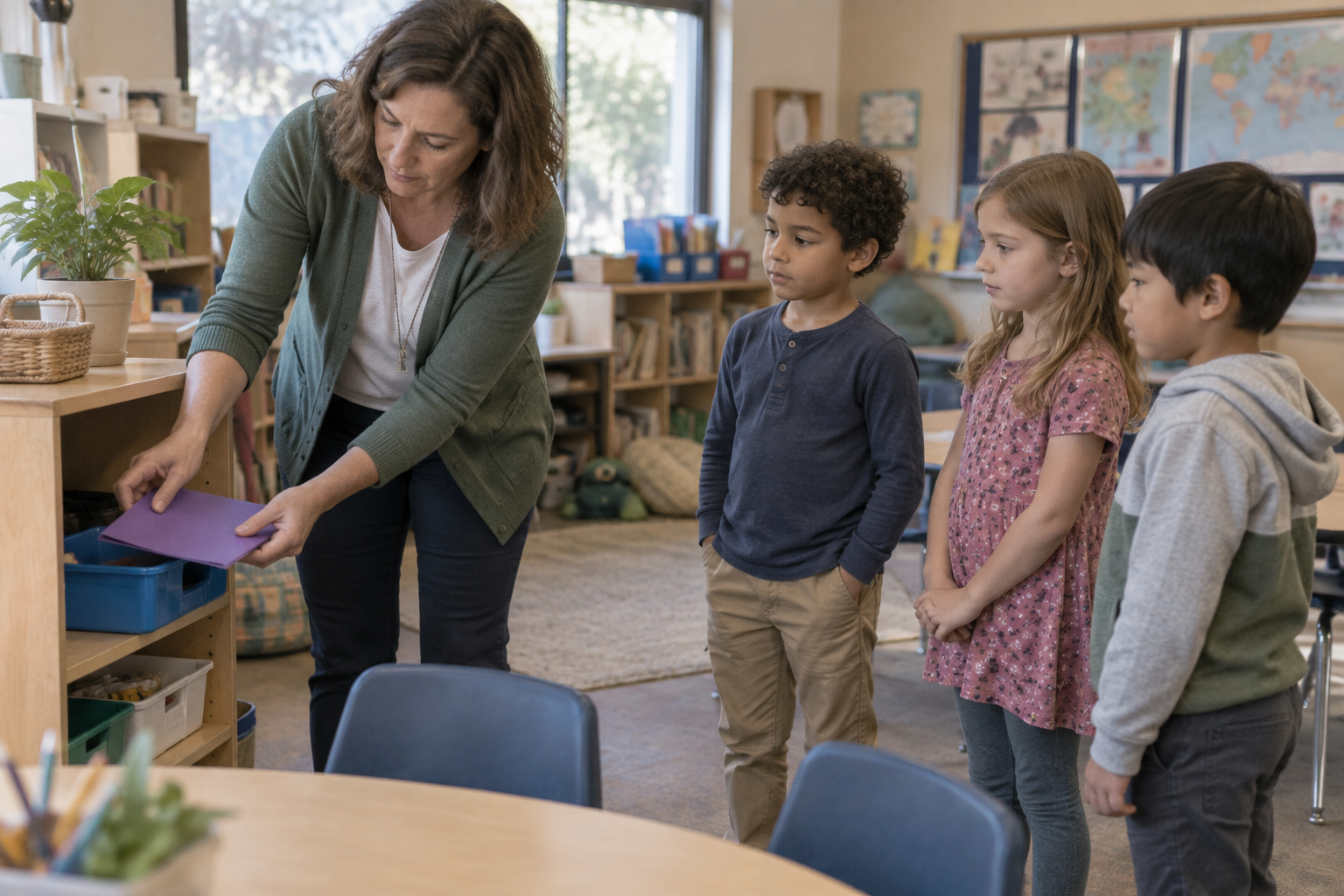
Think through the routine from a child’s position. What tells students it’s time to begin? What happens to unfinished work? Where do they go when the materials are put away? Those details may feel obvious to you because you know what comes next in the lesson.
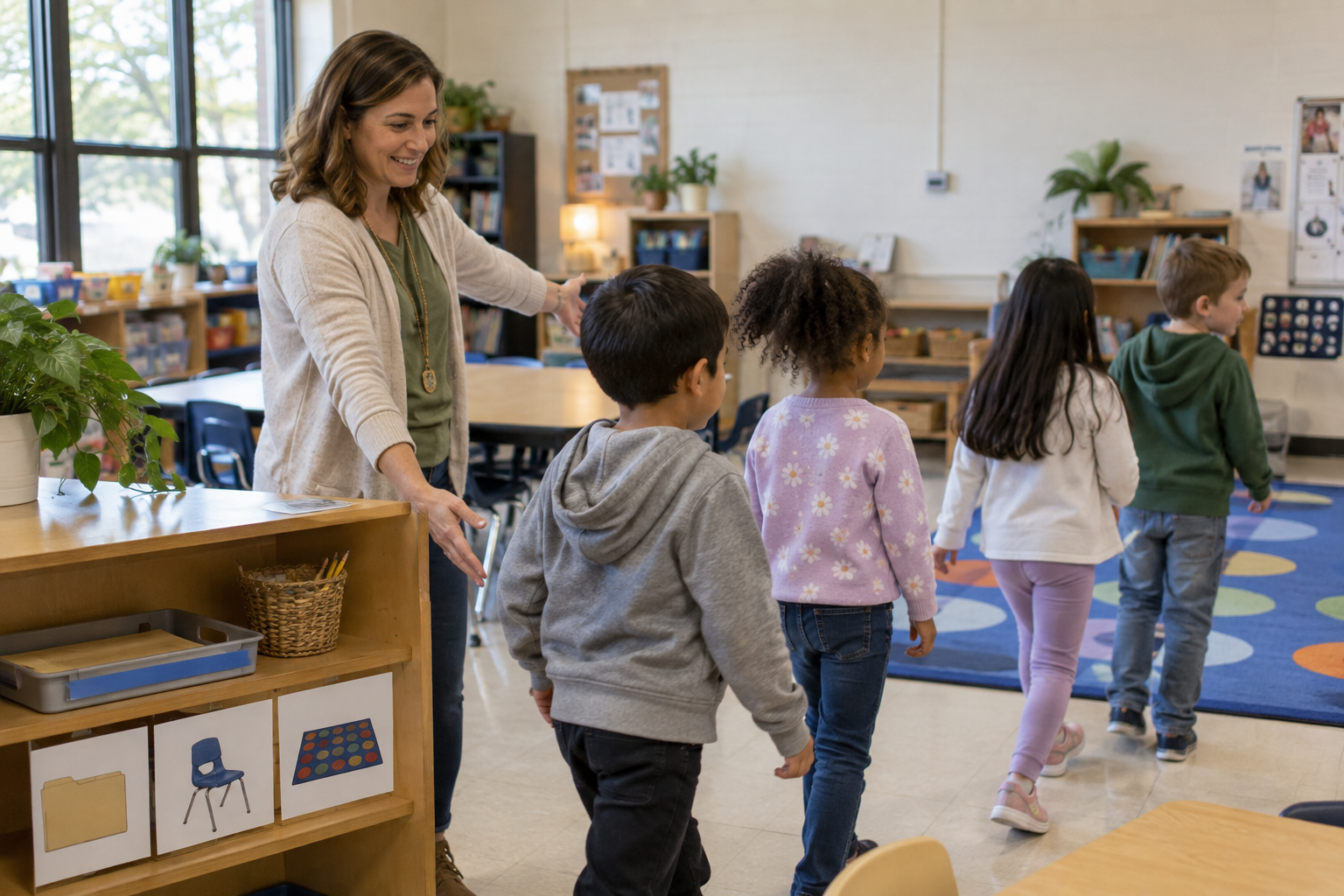
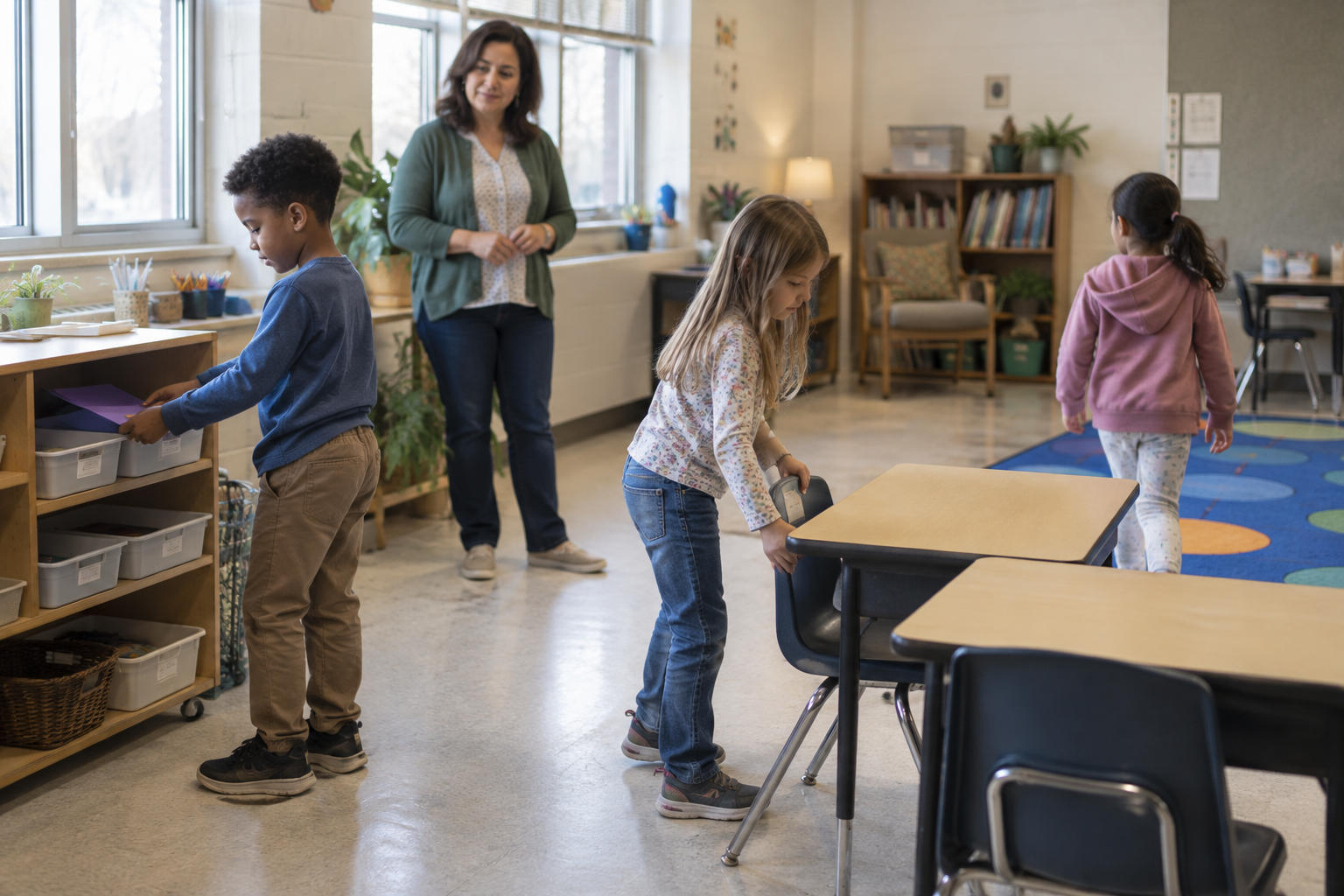
Choose a few steps you can explain and show. For our example, that might be closing the folder, placing it in the tray, tucking in the chair, and walking to a carpet space. Decide what students should do once they arrive, too. You might have them look at the picture on the board while they wait for the group.
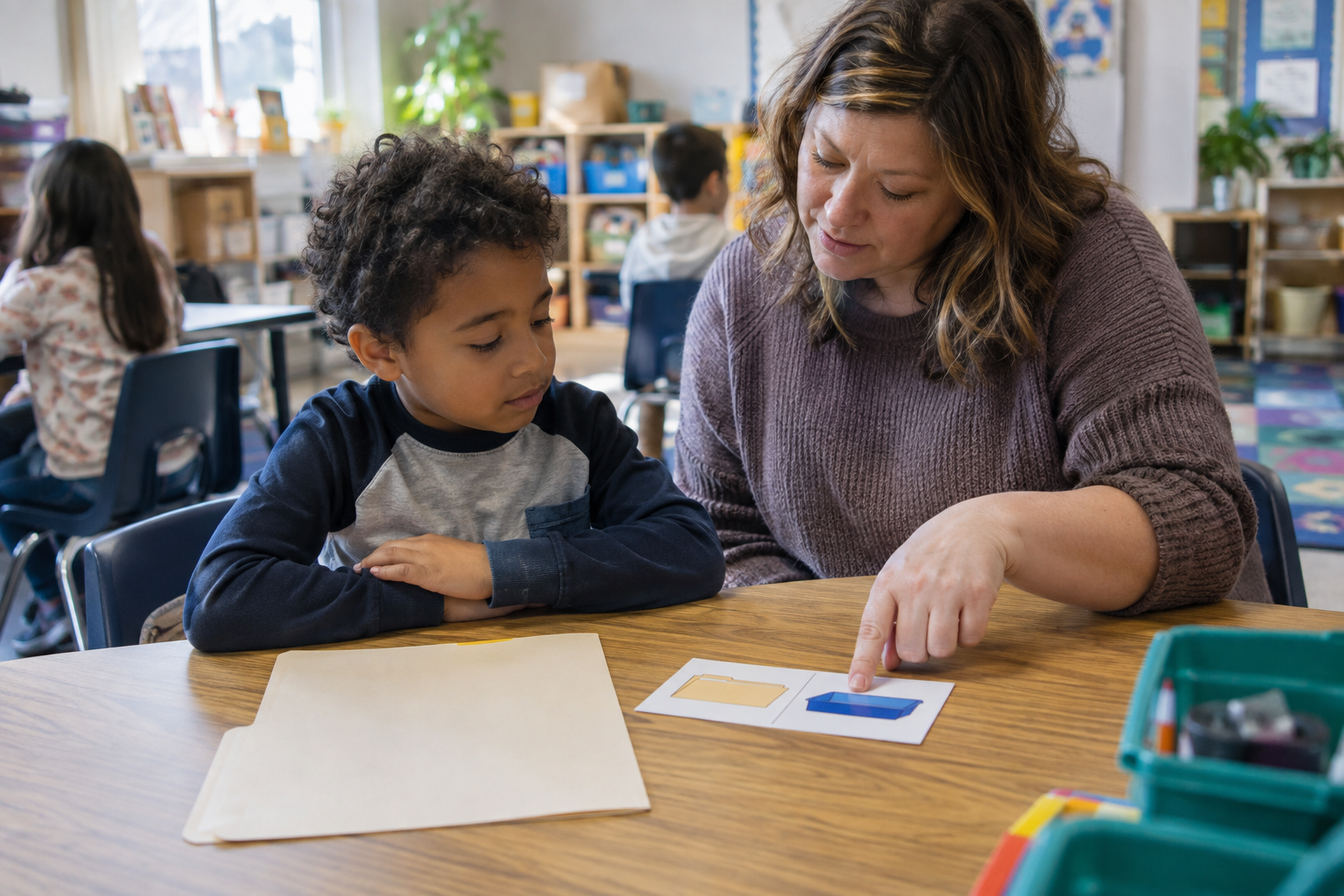
Use the same short wording when you teach and remind. A picture of the folder tray beside a picture of the carpet can help children check what comes next. Keep the cue where students need it, and make sure it matches your actual room. A photograph of your own tray may be easier to recognize than an unfamiliar symbol.
Model the steps at a pace children can follow
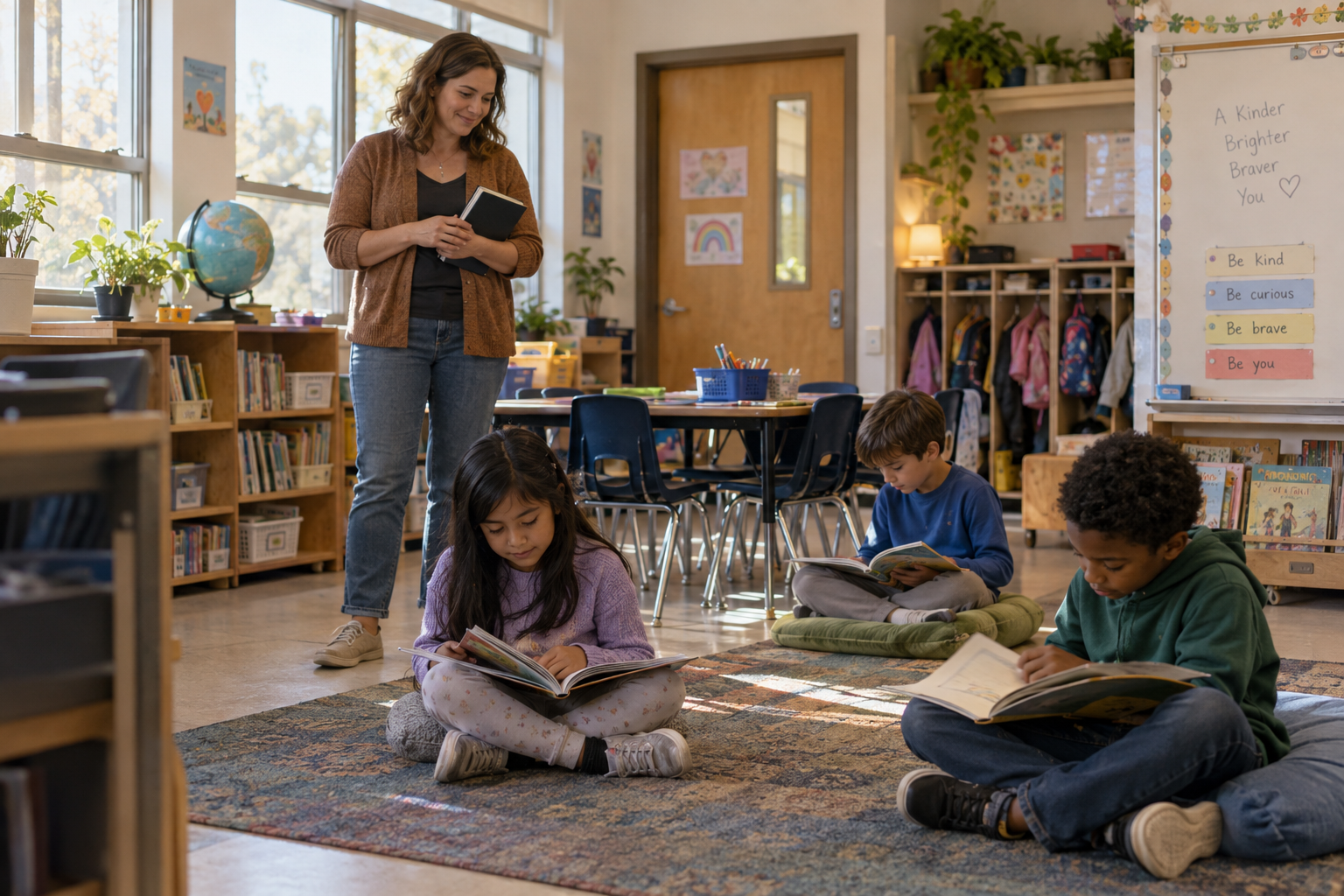
Tell students what to watch before you demonstrate. You might say, “Watch what I do with my folder and where I go afterward.” Then walk through the routine slowly enough that they can see each action. Speak briefly as you move: “My folder goes here. I tuck in my chair so there’s room to walk.”
When you finish, invite students to name what they noticed. If they missed a step, show that part again. You can also demonstrate a decision they’ll need to make, such as where an unfinished paper belongs. Answering that question now may save several children from stopping to ask during the transition.
I would keep the demonstration ordinary and manageable. Use the same materials, route, and destination students will use. If you model with an empty table but children usually have counters, pencils, and papers to organize, include those materials so the practice reflects what you’re asking them to do.
Give students a brief chance to try
Once students have seen the steps, let a small group try while you watch. Then give the other children a turn. Starting with a few students can help you spot a crowded tray or an unclear direction before the entire class moves through the space.
Tell students what worked in language connected to the action: “You put your folder in the tray and moved toward the carpet. That left room for the next person.” If someone gets stuck, give a short prompt and help with that step. You may discover that a child needs to see how the folder fits rather than hear the whole direction again.
Keep practice focused and brief. If the difficulty is putting materials away, practice that part without repeating every step from the beginning. When frustration is rising, pause and return to the teaching at a calmer moment. Children should be able to understand what they’re practicing and have a reasonable chance to succeed.
Use the routine during the real day
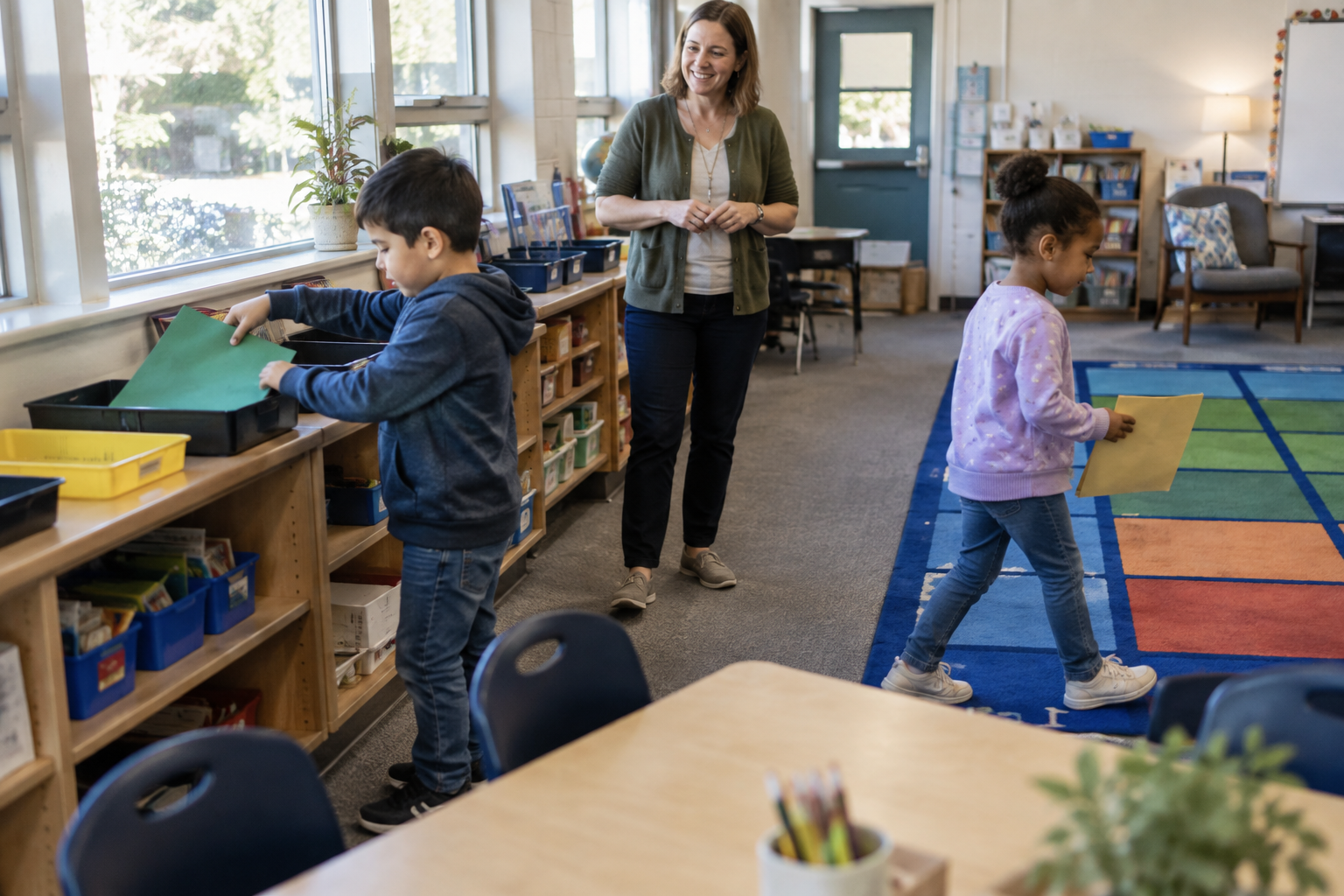
Before the next table-to-carpet transition, remind students of the starting step: “When I give the signal, close your folder and take it to the tray.” Have the carpet activity ready, and position yourself where you can see the place that has been difficult. That lets you offer help without calling directions from across the room.
Notice what happens when everyone participates. A routine that worked with four children may need an adjustment when the whole class tries it. You might release one table at a time or use a second tray if the first location creates a backup. Make the change clear before students begin again.
Once children are moving through the steps, give them a little space to do the work. Try allowing a moment for students to use the picture cue or remember what comes next before adding another reminder. You can stay available while gradually reducing the amount of talking you do through the transition.
Help the child who needs something different
If most students can follow the routine and one child continues to struggle, watch that child’s experience. They may need more time to organize materials, a closer place to put their folder, or a cue they can keep on the table. Ask them to show you where they get stuck and work through that part together.
Keep any individual supports already in place. The goal is for the child to participate successfully, and the help they need may look different from a classmate’s. If you’re unsure what adjustment would help, bring your observations to the appropriate school team. Specific details about the difficult step give you a useful starting point for that conversation.
Notice progress and plan the next practice
At the end of the week, look back at the part you chose. Are fewer children waiting at the tray? Do students know what to do when they reach the carpet? Are you giving fewer reminders? Those observations tell you more about the routine than whether one transition happened to be especially quick.
Return to a brief model when the setup changes, after a break, or when you notice the same confusion returning. You might say, “Our folder tray moved. Let’s look at the new spot before we begin.” Keep the practice tied to what students need now, and recognize the steps they already manage independently.
Tomorrow, choose one routine, decide where it begins and ends, and show the part that needs teaching. Next week, we’ll bring the pieces of this series together into a classroom management plan you can actually use. For practical support each week, join The Teacher Cue Weekly Classroom Note, my free newsletter for primary teachers.
WANT A LITTLE MORE SUPPORT EACH WEEK?
Get The Teacher Cue delivered to your inbox every Tuesday.
One real classroom moment. One practical response. Exact words you can use. No fluff.
Click Here: SEND ME THE TEACHER CUE →

💛 Lauren
I help K–3 teachers create calmer, more manageable classrooms so they can spend less time managing behavior and more time teaching.
READ NEXT:
Why Students Don’t Follow Directions the First Time (and What to Do Instead)
If you find yourself repeating directions all day, the problem may not be that your students aren't listening. Learn five simple shifts that can make directions easier for K–3 students to hear, understand, and follow.


