
How AI Can Turn Daily Behavior Incidents into Powerful Teaching Moments
Classroom Management, Early Elementary, Behavior Support
How AI Can Turn Daily Behavior Incidents into Powerful Teaching Moments
This week I am going to show you how to use simple AI tools to quickly reflect on behavior incidents, coach students, and protect your instructional time in kindergarten through third grade.
As a primary teacher, you juggle a lot: tying shoes, teaching phonics, managing big feelings, and keeping 20+ little humans safe and learning. In all of that, behavior incidents can feel like one more thing pulling you away from instruction.
But what if those challenging moments—arguing over crayons, blurting out during carpet time, refusing to line up—could become quick, meaningful teaching opportunities instead of time-consuming power struggles? And what if AI could do the heavy lifting in the background so you don’t have to?
📌 Key Takeaway: You don’t need to be “techy” to use AI. You just need a simple, repeatable way to capture what happened and let the tool help you reflect, respond, and plan next steps.

Why Primary Behavior Feels So Big (Even When Kids Are So Small)
In kindergarten through third grade, students are still learning how to be learners:
How to share materials and space with classmates
How to wait their turn to talk… even when they’re so excited
How to manage big feelings when something feels unfair or frustrating
That means behavior incidents aren’t a sign that you’re doing something wrong—they’re a sign that kids are practicing skills they don’t have yet. The challenge is that you rarely have 15 minutes in the middle of math to document what happened, think through the function of the behavior, and plan a calm follow-up conversation.
“I know I should reflect after incidents, but by the time dismissal is over, I can barely remember the details—let alone write them up.”
— First Grade Teacher

Where AI Fits into Your K–3 Classroom
When I talk about AI, I’m not talking about replacing your professional judgment or “robot teachers.” I’m talking about using AI as a thinking partner—a tool that helps you:
Capture the details of an incident quickly, in your own words
Spot patterns across days or weeks (time of day, triggers, settings)
Generate student-friendly language you can use in a follow-up conversation or social story
Draft calm, professional communication to families or your support team
💡 Pro Tip: Think of AI as your after-school debrief partner. You bring the context and heart. It brings structure, language, and patterns you might miss when you’re tired.

Turning an Incident into a Teaching Moment: A K–3 Example
Let’s walk through a familiar scenario in a primary classroom and see how AI can support you from start to finish.
Step 1: Capture What Happened—Quickly
During centers, two students argue over a set of markers. One pushes, the other cries, and the noise level spikes. You intervene, separate students, and get the class back on track. You don’t have time for a full reflection in that moment, but you can jot a quick note in your incident form:
Time: 10:15 a.m. – literacy centers
What happened: Arguing over markers, Student A pushed Student B
Your quick response: Separated students, reminded of center rules, offered alternative materials
That’s it. No long narrative. Just enough for AI to work with later.
Step 2: Let AI Help You Reflect After School
After dismissal, you open your AI-supported incident log. With one click, the tool reviews your notes from the week and highlights a pattern:
Most incidents with Student A are happening during unstructured sharing of materials.
The common trigger: “wants a specific item another student has.”
Instead of staring at a blank screen trying to write a summary, the AI suggests a short reflection based on your notes:
“Student A often becomes upset when they want a specific material that someone else is using. When they don’t get it right away, they may push or grab. They need support with waiting, asking for a turn, and handling disappointment.”
💡 Pro Tip: You always remain the decision-maker. Use AI’s draft as a starting point and adjust it to match what you know about the child and your classroom.
Step 3: Create a Student-Friendly Teaching Moment
Next, you ask the AI to turn that reflection into a simple, developmentally appropriate script you can use with Student A the next morning. For example:
“Yesterday during centers, you really wanted the markers that your friend was using. When you didn’t get them right away, your body made a pushing choice. Today, let’s practice what to say instead. You can say, ‘Can I have a turn when you’re done?’ or ‘Can we share?’”
You can even have AI help you draft a quick visual script or social story you can print and keep in your calm corner or center bin.
Step 4: Communicate Clearly with Families and Your Team
When you’re ready to loop in families or your support team, AI can help you draft a calm, factual summary that keeps the focus on skill-building, not blame. For example:
“During literacy centers today, there was a disagreement over shared materials. Your child pushed a peer when they were frustrated about not getting the markers right away. We practiced using words like, ‘Can I have a turn when you’re done?’ and we’ll keep supporting this skill at school. You can reinforce this at home by practicing taking turns with favorite toys.”
⚠️ Warning: Never copy and paste AI-generated language without reading it carefully. Always check for accuracy, tone, and alignment with your school’s policies.

Protecting Your Instructional Time While Supporting Behavior
The goal isn’t to spend more time on behavior paperwork. The goal is to spend less time reacting and more time teaching. When you let AI handle the repetitive pieces—summaries, patterns, drafts—you free up your energy for the parts no tool can replace:
Building trusting relationships with your students and families
Modeling calm, regulated responses when things go sideways
Teaching and re-teaching expectations in ways that make sense for five-, six-, seven-, and eight-year-olds
💡 Pro Tip: Start with just one routine—like documenting incidents during centers or recess—and let AI support that single area before you expand.

Bringing This into Your Classroom
You don’t need a new curriculum or a full tech overhaul to get started. You need:
A simple way to jot down what happened (a quick form, checklist, or notes page)
An AI tool you trust to help you turn those notes into patterns, scripts, and summaries
A commitment to use those insights to teach skills, not just document problems
When you combine your expertise in early childhood with the right AI support, those daily behavior bumps become chances to grow problem-solvers, peacemakers, and self-advocates—without sacrificing your sanity or your small-group reading time.
📌 Key Takeaway: AI doesn’t replace your heart for your students. It simply gives you back the time and language you need to turn “uh-oh” moments into “we learned something today” moments.
DID YOU KNOW…
Did you know I organize a FREE Facebook Group for Mastering Classroom Management? We are gearing up for our summer sessions, so if you’re looking for a simple way to improve your classroom management join the already 200+ teachers that have signed up: Mastering Classroom Management Facebook Group
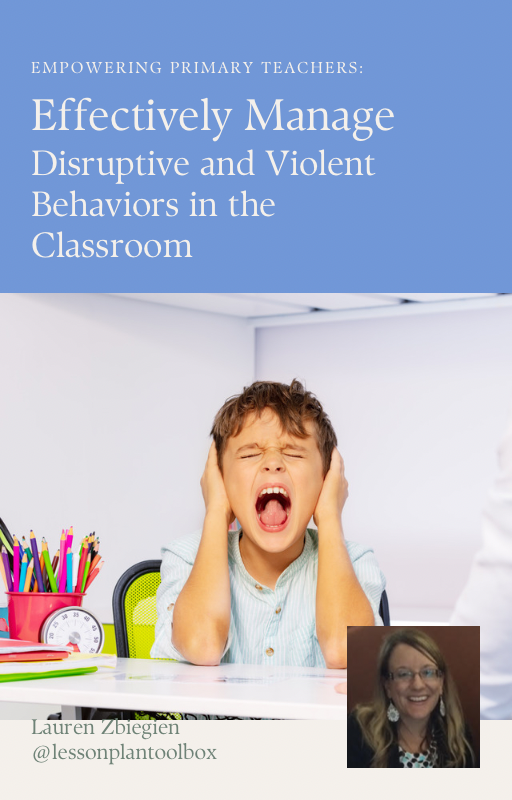
Your ebook GIFT: Empowering Primary Teachers: Effectively Manage Disruptive and Violent Behaviors in the Classroom
FINALLY…
If you enjoyed the tips in this post, you might also enjoy this series of Classroom Management by Design for Primary Teachers:
The Hidden Reason Some Students Can't Focus Before Lunch
Teaching Accountability to Young Students: A Practical Guide for K–3 Teachers
Unlock the Key to Supporting Neurodivergent Learners - Without Overwhelm
Finished Early? Now What? 10 Brilliant Ways to Keep Students Engaged Without the Chaos
A Guide to Creating an Intrinsically Motivated Classroom
Expanding AI's Role in the Primary Classroom
Unlock the Power of AI in the Primary Classroom
Supporting a Student Being Bullied
Don’t forget to follow us over on Instagram!
Teach~Relax~Repeat
Lauren
About Lesson Plan Toolbox
Lesson Plan Toolbox helps K–3 teachers build calm, structured, emotionally regulated classrooms through brain-based systems, movement integration, and ready-to-use behavior tools — so they can teach with confidence instead of stress. Founded by an educator with 20+ years of classroom and assistant principal experience.


