
How To Gamify Classroom Management Without Bribes: 2 Simple K-3 Systems That Work
Welcome to our yearlong series on Classroom Management by Design for Primary Teachers. Each week we will give you a new piece to the classroom management puzzle to have in place when you need it this school year. Think of it as a Lego kit just waiting to be built.
Classroom Management by Design for Primary Teachers: How to Gamify Classroom Management Without Bribes: 2 Simple K–3 Systems That Work
If you teach in primary grades, you’ve probably felt this at some point during the year.
It’s mid-morning. You’re transitioning from carpet to centers, and suddenly half the class moves smoothly while a few students wander, one calls out, and another needs three reminders just to begin. You catch yourself thinking, Why does everything feel so hard when I know they’re capable of more?
Many teachers turn to reward systems because they want cooperation quickly. And for a little while, prizes and incentives can seem to work. But over time, something shifts. Students begin asking what they’ll earn before they focus on what they’re learning, and classroom management starts to feel like constant negotiation.
The truth is, primary students don’t actually need bigger rewards.
They need systems that help them see themselves differently.
Gamified classroom management can create engagement and structure without turning behavior into a transaction. When the focus shifts toward identity and responsibility, students begin participating because of who they are becoming, not what they receive.
Strategy 1: Identity Badges for Kindergarten and First Grade
In younger classrooms, behavior improves fastest when students feel connected to a role inside the community.
Kindergarten and first graders are still learning who they are at school. When expectations are framed as identities rather than rules, students begin practicing those identities throughout the day.
Instead of tracking behavior as good or bad, introduce simple classroom badges connected to character:
Kind Friend
Patient Waiter
Problem Solver
Class Helper
During morning meeting, you might model what each looks like in real life. A Kind Friend notices someone sitting alone. A Patient Waiter keeps their body calm even when excited to share.
The power comes from how often the language appears during real moments.
During clean-up time, you might notice:
“I see several Class Helpers taking care of our materials.”
In the hallway:
“That quiet walking shows Patient Waiter energy.”
Around the second or third week, many teachers notice students beginning to use the language themselves. One child reminds another, “We’re supposed to be helpers,” before the teacher even speaks. That’s the moment the system starts carrying the weight instead of you.

Why Identity Works So Well
Young children want belonging more than rewards.
When students hear identity language consistently, they begin protecting that identity. Redirection becomes calmer and more neutral:
“Does that match what a Kind Friend would do right now?”
Instead of shame or correction, students are invited back into the role they already understand.
Over time, classroom expectations feel predictable and safe, which reduces the need for constant reminders.
Strategy 2: A Classroom Economy for Second and Third Grade
As students grow, they’re ready for more responsibility and long-term thinking. Second and third graders especially thrive when classroom systems feel connected to real life.
A classroom economy like Every Dollar Has a Job turns behavior and decision-making into meaningful practice.
Each student receives a weekly classroom salary. Throughout the week, they make choices about spending, saving, and working toward a larger goal such as a Mystery Fun Day.
During a scheduled weekly routine, often built into math time on Fridays, students balance their budgets. They add income, subtract expenses, and see how close they are to their goal.
This is usually where teachers notice the first big shift. Math conversations become focused, and behavior discussions become quieter because choices now have visible outcomes.
Instead of lectures, you can calmly say:
“Let’s think about how this decision might affect your budget when we meet on Friday.”
The structure becomes the neutral guide.

Bringing Real Life Into the Classroom
Many teachers deepen engagement by adding simple classroom “bills” like desk rent or technology fees. Students divide remaining money into savings, needs, and fun spending.
Within a few weeks, students begin planning ahead. Some resist spending early because they want to reach the long-term goal. Others learn naturally from overspending and adjusting the following week.
These are real conversations about responsibility happening inside a safe classroom structure.
What Changes When Systems Carry the Weight
When classroom management relies on systems instead of constant reminders, the emotional tone of the room changes.
Transitions become steadier.
Students solve smaller problems independently.
You find yourself giving fewer corrections during lessons.
And one day you realize you taught an entire block without feeling like you were managing behavior every minute.
The classroom simply feels calmer.
Not perfect. Just steady.
Keeping Motivation Intrinsic
Whether you’re using identity badges or a classroom economy, the goal is the same: help students grow into responsibility.
That means:
naming effort instead of labeling students
using systems as feedback rather than punishment
building reflection into routines
focusing on growth over perfection
Structure creates freedom for both students and teachers. When expectations are clear and consistent, students feel safe enough to regulate themselves.
The Bigger Picture of Classroom Management
Effective classroom management isn’t about control.
It’s about helping children believe:
I belong here.
My choices matter.
I am capable of managing myself.
When students begin to see themselves this way, behavior improves because identity has changed.
And that’s when teaching feels lighter again.
If you’ve ever felt like behavior systems work for a few weeks and then slowly fall apart, there’s usually one missing piece that determines whether they last all year or fade by October. That’s something I teach more deeply inside Lesson Plan Toolbox, because sustainability is what truly creates a calm classroom.
Manage Student Behavior in 5 Minutes a Day!
Do you see student behavior going through the roof right about now?
Have you tried EVERYTHING and NOTHING seems to work?
Trust me, I've been there!
This is EXACTLY why I created The Student Behavior Scenario of the Day Cards for primary teachers. You will improve student behavior AND your classroom management in just 5 minutes a day!
As teachers, we can't assume that students know how to behave or what is expected of them and so often that is where things go wrong for us. (We all know what happens when we ''assume", but yet we still do it anyway.)
These cards changed EVERYTHING for me in the primary classroom because students LOVE talking about behavior AND they want to meet your expectations.
Best of all, each card has scenario of the day, reflection questions, and possible consequences that teachers can use in each situation.
GRAB YOUR FREE SAMPLE HERE: Student Behavior Scenario of the Day Cards
DID YOU KNOW…
Did you know I organize a FREE Facebook Group for Mastering Classroom Management? We are gearing up for our school year quarter sessions, so if you’re looking for a simple way to improve your classroom management join the already 200+ teachers that have signed up: Mastering Classroom Management Facebook Group
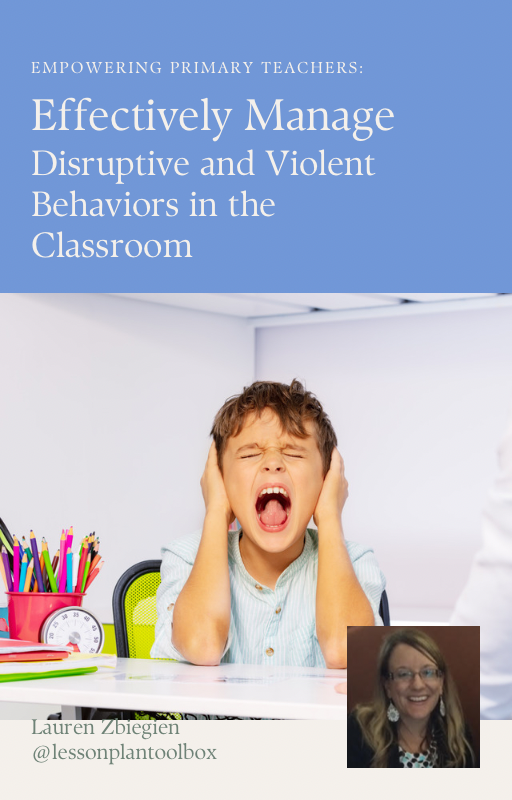
Your ebook GIFT: Empowering Primary Teachers: Effectively Manage Disruptive and Violent Behaviors in the Classroom
FINALLY…
If you enjoyed the tips in this post, you might also enjoy this series of Classroom Management by Design for Primary Teachers:
The Hidden Reason Some Students Can't Focus Before Lunch
Teaching Accountability to Young Students: A Practical Guide for K–3 Teachers
Unlock the Key to Supporting Neurodivergent Learners - Without Overwhelm
Finished Early? Now What? 10 Brilliant Ways to Keep Students Engaged Without the Chaos
A Guide to Creating an Intrinsically Motivated Classroom
Expanding AI's Role in the Primary Classroom
Unlock the Power of AI in the Primary Classroom
Supporting a Student Being Bullied
Don’t forget to follow us over on Instagram!
Teach~Relax~Repeat
Lauren


