
How to Help a Child With Behavior Problems at Home When Nothing Else Works
Welcome to our yearlong series on Classroom Management by Design for Primary Teachers. Each week we will give you a new piece to the classroom management puzzle to have in place when you need it this school year. Think of it as a Lego kit just waiting to be built.
Classroom Management by Design for Primary Teachers: How to Help a Child With Behavior Problems at Home When Nothing Else Works
“I’ve Taken Everything Away and Nothing Works.”
What Teachers Can Say — and Share — When Parents Run Out of Answers
Behavior strategies for parents of elementary students | Lesson Plan Toolbox
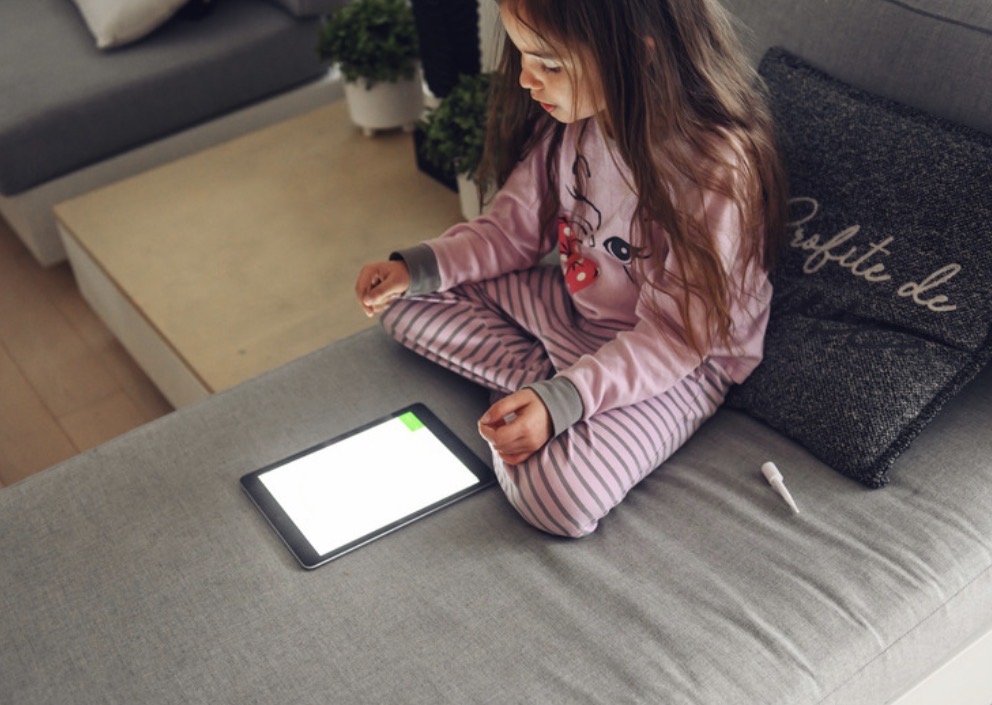
“She sees the same things at home. She’s taken away the tablet, the screen time, the weekend plans. She looked right at me and said, ‘I just don’t know what else to do.’”
If you’ve ever sat across from a caregiver and heard those words — or felt that particular kind of heavy silence that follows them — you already know: this isn’t a story about a parent who doesn’t care.
This is a story about a parent who cares so much, they’ve exhausted every tool they have.
And they’re looking at you for one more.
Here’s the truth that most classroom management advice skips: taking away privileges is a surface-level strategy. It addresses the effect of a behavior, not the energy behind it. And for kids who are dysregulated, overwhelmed, or carrying stress they can’t yet name — consequences alone won’t move the needle.
What will? Teaching the adults in that child’s world how to lead their energy differently. That’s what this post is about.
Why “Remove the Privilege” Stops Working (And What’s Actually Going On)
Before you can hand a parent new strategies, they need a quick reframe. Otherwise they’ll take your suggestions home and apply them with the same frustrated energy they’ve been using all along — and wonder why nothing changes.
Here’s the reframe: behavior is communication. When a child is acting out repeatedly, their nervous system is telling you something their words can’t yet say. They might be feeling unsafe. Disconnected. Overstimulated. Completely out of control inside.
When a child is in that state, the thinking brain — the part that weighs consequences and makes good choices — is literally offline. You can take away every screen in the house, and their brain still can’t access logic. Not because they’re bad. Because they’re flooded.
Punishment teaches what not to do. Regulation teaches how to feel calm enough to choose differently. We need both. But for kids who are stuck in a behavior cycle, regulation has to come first.
That’s the message that can change everything for a family — and it’s one you’re uniquely positioned to deliver.

How to Open the Conversation Without Putting Parents on the Defensive
The way you frame this conversation matters as much as what you say in it. Parents who feel judged shut down. Parents who feel partnered with lean in.
Start by naming their effort out loud before you offer anything new:
💬 Say this first: “I want to say something before we dive in — you have clearly been fighting for your child. The fact that you’ve already tried so many things tells me exactly how much you love them. I’m not here to tell you what you’ve been doing wrong. I want us to add some new tools to what you’re already doing, because I think the right approach is closer than it feels right now.”
From there, you can introduce the nervous system piece in plain language — no clinical jargon required:
💬 Then say this: “Here’s something that completely shifted how I think about behavior: when kids are overwhelmed, their brain actually can’t process consequences the way we expect it to. It’s not defiance — it’s a flooded nervous system. What we want to do is teach their body how to find calm again. Once they can do that, consequences start to land differently.”
This is not about excusing behavior. It’s about understanding the root system so you can actually pull the weed.

5 Brain-Based Behavior Strategies for Parents to Try at Home
Keep your recommendations to one or two things per conversation. An overwhelmed parent doesn’t need a 12-step plan. They need one thing that actually works, that gives them a win, that rebuilds their confidence.
Here are five strategies rooted in how the brain and nervous system actually work — with language you can use to walk parents through each one:
1. Connection Before Correction
Before redirecting a child’s behavior, make physical or emotional contact first. Crouch down. Say their name softly. Put a hand on their shoulder. Five seconds of connection lowers the stress response and makes the child’s brain far more receptive to guidance.
This is one of the most powerful behavior strategies for parents of elementary students because it costs nothing and works immediately.
💬 What to say to the parent: “Before you correct them, try connecting first. Get low, say their name, make eye contact. You don’t have to say anything deep — just ‘Hey. I see you.’ Give it five seconds. Watch what shifts.”
2. Name the Feeling Out Loud
Research from neuroscientist Dan Siegel calls it “name it to tame it” — and it works. When a child hears their feeling named by someone calm, their brain begins to regulate. The parent doesn’t have to fix anything. They just have to witness.
💬 What to say to the parent: “Next time they’re escalating, try this: ‘It looks like you’re really frustrated right now. That makes sense.’ Don’t explain, don’t lecture, don’t problem-solve yet. Just name it. You’ll be amazed how quickly the temperature in the room drops.”
3. Add Responsibility, Don’t Just Remove Privilege
Kids who push boundaries hardest are often kids who desperately need to feel important and capable. Instead of only taking things away, try giving them something meaningful to be in charge of at home.
A special job, a responsibility only they hold, a role that signals: I trust you. Responsibility builds self-worth. And self-worth is the nervous system’s best friend.
💬 What to say to the parent: “Try giving them one job at home that’s just theirs — something that matters to the household. Not as a reward. Just as a role. ‘You’re in charge of setting the table.’ ‘You’re our door-checker at night.’ You’re sending the message: you belong here, and we need you.”
4. Build a Reset Ritual — Before They Need It
A calm-down routine only works if you practice it when everyone is already calm. Help families create a reset ritual — something they do together, regularly, that signals safety and regulation. Three breaths. A walk around the block. Five jumping jacks. Whatever fits their family.
When it’s woven into normal life, it becomes a reflex. And reflexes are available even when the thinking brain isn’t.
💬 What to say to the parent: “Pick one thing you can do together when things are calm — three deep breaths, a stretch, a silly dance. Practice it when nobody’s upset. Then when things get hot, you say, ‘Let’s do our thing.’ You’re not starting a fight. You’re activating a system.”
5. Be the Calm in the Room — On Purpose
This one is for the parent, not the child. Co-regulation is the foundation of all behavior change. Kids can’t regulate themselves before they’ve experienced regulation with a safe adult. When caregivers learn to regulate their own nervous system first, everything else gets easier.
💬 What to say to the parent: “The most powerful thing you can do in a moment of chaos isn’t what you say — it’s your energy. If you can slow your own breathing, drop your shoulders, soften your voice — their nervous system will start to mirror yours. You become the calm they can borrow until they find their own.”
Words to Avoid in Parent Conferences About Behavior
Even well-meaning teachers can accidentally flip a parent from open to closed in one sentence. These phrases tend to sting:
"You should be more consistent." — Implies they’re not.
"At school this isn’t a problem." — Isolating. Not helpful.
"Have you tried...?" — Dismisses what they’ve already done.
"They just need firmer boundaries." — Oversimplifies and shuts the door.
Swap those for partnership language: “What’s been working, even a little?” or “Can I share something that might look different from what you’ve tried?” or “You know your child better than anyone — let’s build on that.”

When the Conversation Needs to Go Further
Sometimes one parent conference and a few strategies isn’t enough. And that’s okay to name — gently, without alarm.
💬 Script for referring to additional support: “I want to make sure [child’s name] has every resource he/she deserves. Would you be open to me connecting you with our school counselor? It’s not about something being wrong — it’s about adding one more person to your team who can support you both.”
If behavior is significantly impacting learning, it may also be time to explore a behavior intervention plan or a referral for a formal evaluation. You’re not overreacting. You’re advocating.

You’re Not Just Managing a Classroom. You’re Leading Energy.
There’s a reason that grandma looked at you and exhaled. Because you’re the person who saw what she sees, named it without judgment, and sat with her in it.
That matters more than any strategy sheet.
When you teach a parent how to lead their energy differently — how to be the calm, the connection, the reset — you’re not just helping one child. You’re shifting a whole household.
That’s the work you were made for.
“Calm is not the absence of chaos. It’s a system you build — one conversation at a time.”
Manage Student Behavior in 5 Minutes a Day!
Do you see student behavior going through the roof right about now?
Have you tried EVERYTHING and NOTHING seems to work?
Trust me, I've been there!
This is EXACTLY why I created The Student Behavior Scenario of the Day Cards for primary teachers. You will improve student behavior AND your classroom management in just 5 minutes a day!
As teachers, we can't assume that students know how to behave or what is expected of them and so often that is where things go wrong for us. (We all know what happens when we ''assume", but yet we still do it anyway.)
These cards changed EVERYTHING for me in the primary classroom because students LOVE talking about behavior AND they want to meet your expectations.
Best of all, each card has scenario of the day, reflection questions, and possible consequences that teachers can use in each situation.
GRAB YOUR FREE SAMPLE HERE: Student Behavior Scenario of the Day Cards
DID YOU KNOW…
Did you know I organize a FREE Facebook Group for Mastering Classroom Management? We are gearing up for our school year quarter sessions, so if you’re looking for a simple way to improve your classroom management join the already 200+ teachers that have signed up: Mastering Classroom Management Facebook Group
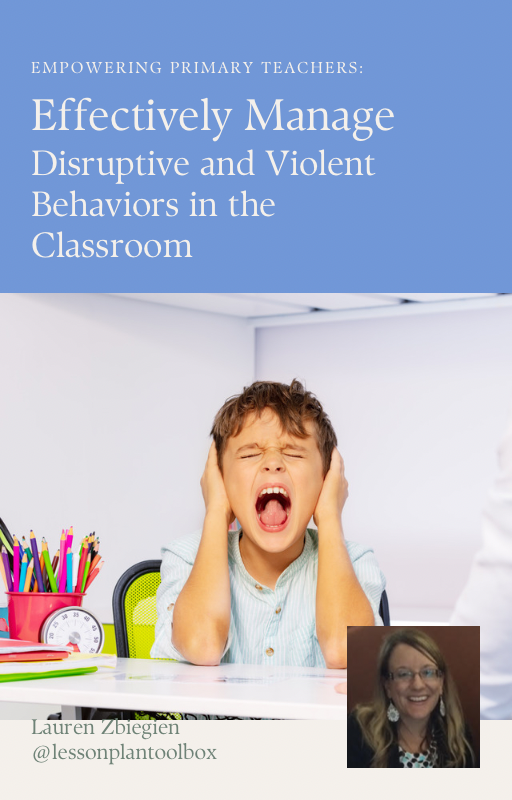
Your ebook GIFT: Empowering Primary Teachers: Effectively Manage Disruptive and Violent Behaviors in the Classroom
FINALLY…
If you enjoyed the tips in this post, you might also enjoy this series of Classroom Management by Design for Primary Teachers:
The Hidden Reason Some Students Can't Focus Before Lunch
Teaching Accountability to Young Students: A Practical Guide for K–3 Teachers
Unlock the Key to Supporting Neurodivergent Learners - Without Overwhelm
Finished Early? Now What? 10 Brilliant Ways to Keep Students Engaged Without the Chaos
A Guide to Creating an Intrinsically Motivated Classroom
Expanding AI's Role in the Primary Classroom
Unlock the Power of AI in the Primary Classroom
Supporting a Student Being Bullied
Don’t forget to follow us over on Instagram!
Teach~Relax~Repeat
Lauren
✨ Want ready-to-use tools that back this up?
The Lesson Plan Toolbox is built for K–3 teachers who want brain-based systems,
not just printables. Behavior tools, regulation frameworks, parent communication scripts,
and a community of teachers who actually get it.


