Should You Hold a Student Back? The Ultimate Guide for Primary Teachers to Make the Right Call
Click here to watch the YOUTUBE version of this post.
Welcome to our yearlong series on Classroom Management by Design for Primary Teachers. Each week we will give you a new piece to the classroom management puzzle to have in place when you need it this school year. Think of it as a Lego kit just waiting to be built.
Classroom Management by Design for Primary Teachers: Should You Hold a Student Back? The Ultimate Guide for Primary Teachers to Make the Right Call
As a primary teacher, you’ve likely faced this question at some point: Should this student be retained? It’s one of the hardest decisions we make. On one hand, we want to ensure every child is academically, socially, and emotionally ready for the next grade. On the other, we know that retention can carry long-term consequences, affecting a child’s confidence, peer relationships, and overall attitude toward learning.
If you’re struggling with whether to recommend retention for a student, you’re not alone. Let’s break this decision down step by step so you can make the best choice for your student’s future.

Step 1: Understand the Research on Retention
Before making any decisions, it’s important to look at the bigger picture. Retention is often viewed as a way to "give students more time" to master foundational skills, but research suggests that it may not always be the best approach.
📌 What Studies Say:
Retention can provide short-term academic gains, especially in reading and math. However, these benefits tend to fade after a few years.
Students who are retained are more likely to struggle with self-esteem and may feel labeled as “failing.”
Retained students have a higher risk of dropping out later in their academic careers, especially if they are retained more than once.
Does this mean retention is never a good option? Not necessarily! But it does mean we need to weigh this choice carefully.

Step 2: Look Beyond Academics
A student’s readiness for the next grade is about more than just test scores or unfinished worksheets. It’s about social and emotional development, executive function skills, and their ability to handle new challenges.
Ask yourself these key questions:
✅ Academic Growth: Has this student made progress, even if they haven’t fully met grade-level expectations? Do they have foundational skills to build on next year?
✅ Social & Emotional Readiness: Will retention negatively impact their self-esteem? How do they interact with peers? Will they feel out of place repeating a grade?
✅ Executive Functioning: Can they follow multi-step directions, complete basic tasks independently, and transition between activities without extreme difficulty?
✅ Parental Support & Home Environment: Does the student have a strong support system at home? Will parents reinforce learning if the student moves forward or stays behind?
✅ Intervention History: Have targeted interventions been tried? Have specialists, support teams, or personalized learning plans been implemented consistently?
If a student is struggling in one area but showing growth in others, they might not need retention—just more scaffolding in the next grade.

Step 3: Consider Alternatives to Retention
Retention isn’t the only option for struggling students. Before making this recommendation, think about other ways to support them.
🔹 Summer Bridge Programs: Can the student enroll in summer school or an intervention program to strengthen weak areas?
🔹 Early Intervention Next Year: Can the student start the next grade with targeted small-group support, tutoring, or additional learning accommodations?
🔹 Modified Assignments: Will differentiated instruction, reduced workload, or personalized learning strategies help this student succeed in the next grade?
🔹 Multi-Age Classrooms: If available, could the student be placed in a setting that allows them to work at different levels without full retention?
Many times, an extra year of structured support is more effective than retention alone.

Step 4: Have Honest Conversations with Parents
No matter your decision, parents need to be included in the process early. Here’s how to approach the conversation with empathy and clarity.
👩🏫 If You Believe Retention is Necessary:
"I want to talk with you about [Student’s Name] and their progress this year. While they have made some growth, they are still struggling in key areas that will make the next grade very challenging. I want to explore the possibility of giving them an extra year to build confidence and strengthen foundational skills before moving forward. Let’s discuss what this would look like and how we can best support [Student’s Name] in making this transition."
👩🏫 If You Believe the Student Can Move Forward with Support:
"I know this has been a tough year for [Student’s Name], but I want to highlight the progress they’ve made. While they aren’t fully at grade level yet, I believe with structured support and a targeted plan next year, they can continue to grow and succeed. I’d love to walk you through our plan for making sure they have what they need moving forward."
No matter what, listen to parents’ concerns and validate their feelings. This decision affects their child deeply, and they need to feel like partners in the process.

Step 5: Make the Decision with Confidence
After gathering data, exploring alternatives, and speaking with parents, it’s time to decide. If you choose retention, ensure it comes with a concrete support plan. If the student moves forward, advocate for interventions that will set them up for success.
If You Choose Retention:
✅ Meet with the next year’s teacher to plan a transition that feels supportive, not punitive.
✅ Create a learning plan that addresses the student’s specific gaps so they don’t simply repeat the same instruction.
✅ Monitor their confidence and peer relationships to make sure they feel successful.
If You Choose Promotion with Support:
✅ Connect the student with interventionists, tutors, or small-group instruction early in the year.
✅ Set up regular progress monitoring so they don’t fall further behind.
✅ Communicate with next year’s teacher so they are aware of challenges and can plan accordingly.

Final Thoughts: The Goal is Growth
At the end of the day, our goal isn’t to hold students back or push them forward at all costs—it’s to create an environment where they can grow, feel successful, and develop a love for learning.
Retention can be beneficial in certain cases, but it should never be the default solution for struggling students. Before making a final decision, consider the whole child, explore support options, and partner with families to find the best path forward.
Remember: You’re not just making a decision for this year—you’re shaping a child’s future. Choose with wisdom, choose with heart, and most of all, choose with the belief that every student is capable of growth.
Manage Student Behavior in 5 Minutes a Day!
Do you see student behavior going through the roof right about now?
Have you tried EVERYTHING and NOTHING seems to work?
Trust me, I've been there!
This is EXACTLY why I created The Student Behavior Scenario of the Day Cards for primary teachers. You will improve student behavior AND your classroom management in just 5 minutes a day!
As teachers, we can't assume that students know how to behave or what is expected of them and so often that is where things go wrong for us. (We all know what happens when we ''assume", but yet we still do it anyway.)
These cards changed EVERYTHING for me in the primary classroom because students LOVE talking about behavior AND they want to meet your expectations.
Best of all, each card has scenario of the day, reflection questions, and possible consequences that teachers can use in each situation.
GRAB YOUR FREE SAMPLE HERE: Student Behavior Scenario of the Day Cards
DID YOU KNOW…
Did you know I organize a FREE Facebook Group for Mastering Classroom Management? We are gearing up for our school year quarter sessions, so if you’re looking for a simple way to improve your classroom management join the already 200+ teachers that have signed up: Mastering Classroom Management Facebook Group
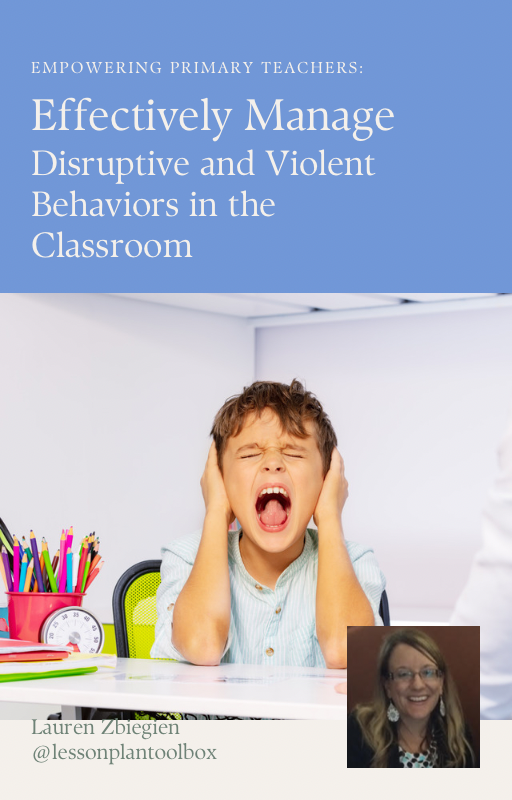
Your ebook GIFT: Empowering Primary Teachers: Effectively Manage Disruptive and Violent Behaviors in the Classroom
FINALLY…
If you enjoyed the tips in this post, you might also enjoy this series of videos Classroom Management by Design for Primary Teachers:
Unlock the Key to Supporting Neurodivergent Learners - Without Overwhelm
Finished Early? Now What? 10 Brilliant Ways to Keep Students Engaged Without the Chaos
A Guide to Creating an Intrinsically Motivated Classroom
Expanding AI's Role in the Primary Classroom
Unlock the Power of AI in the Primary Classroom
Supporting a Student Being Bullied
What to do With a Bully in the Primary Classroom
Don’t forget to follow us over on Instagram!
Teach~Relax~Repeat
Lauren