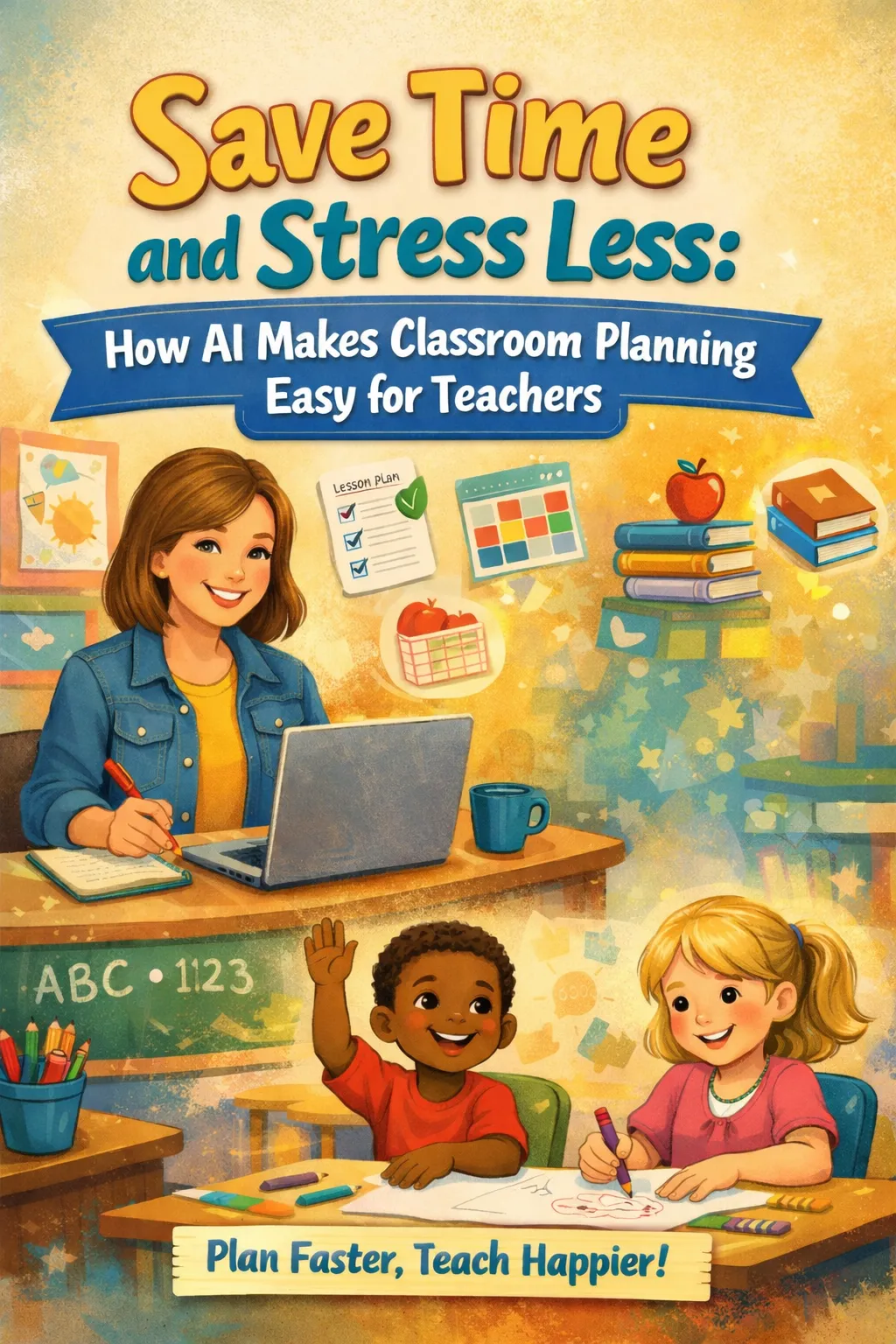
Teachers Love This: How AI Makes Classroom Planning Faster, Easier, and Stress-Free
Teachers Love This: How AI Makes Classroom Planning Faster, Easier, and Stress-Free
It's Sunday evening.
You're sitting at your kitchen table surrounded by curriculum binders, a cold cup of coffee, and a to-do list that somehow grew longer since Friday afternoon.
You have four lesson plans to finish, two behavior reflection sheets to update, a parent newsletter to write, and a small group activity to differentiate for three different reading levels — all before 7:30 a.m. tomorrow.
You've been teaching long enough to know that this is just part of the job.
But lately? It's starting to feel like the planning is the job, and the actual teaching — the part you fell in love with — is the thing you're rushing to fit in between all of it.
Here's what most teachers don't know: this exhaustion isn't a sign that you're doing something wrong. It's a sign that the system was designed before better tools existed.
And those better tools? They're already here.

What Most Teachers Don't Know About AI in the Classroom
When teachers hear "AI," a lot of them picture something complicated — a tech tool that requires a training seminar, an IT department, and three passwords just to log in.
But that's not what modern AI tools actually look like for teachers.
Here's the truth that's changing everything for K–3 educators right now:
AI doesn't replace your teaching expertise. It amplifies it.
Your knowledge of your students — their personalities, their learning needs, their quirks — that's irreplaceable. What AI can do is take the administrative and creative labor off your plate so your expertise has more room to breathe.
And there's a brain science reason this matters.
Research in cognitive load theory shows that the human brain has a limited capacity for decision-making and creative thinking in a given day. Every time you spend mental energy drafting a lesson from scratch, searching for the right worksheet, or rewriting the same behavior plan with slightly different wording, you're drawing from the same cognitive bank you need for actually teaching your students.
AI tools reduce what researchers call "extraneous cognitive load" — the mental energy spent on tasks that don't directly serve learning. When that load lightens, teachers have more bandwidth for the high-value work: building relationships, adjusting instruction in the moment, and being present with their kids.
That's not a small thing. That's the whole game.
Picture Your Classroom on a Monday Morning
Imagine this version of Monday morning.
Your lesson plans are already done — not rushed, not cobbled together at midnight, but genuinely ready. Your small group materials are differentiated. Your behavior reflection prompts are printed. Your parent communication draft is sitting in your drafts folder, personalized and warm.
You walk in rested. You greet your students at the door with full presence. When a behavior challenge comes up mid-lesson, you're not operating on a depleted tank. You have the mental space to respond thoughtfully instead of just react.
That's not a fantasy. That's what teachers describe when they start using AI tools consistently as part of their planning process.
The classroom doesn't change. Your students don't change. But you show up differently — and kids feel that.
5 Ways AI Makes K–3 Planning Faster, Easier, and More Effective
1. Generate Full Lesson Plans in Minutes
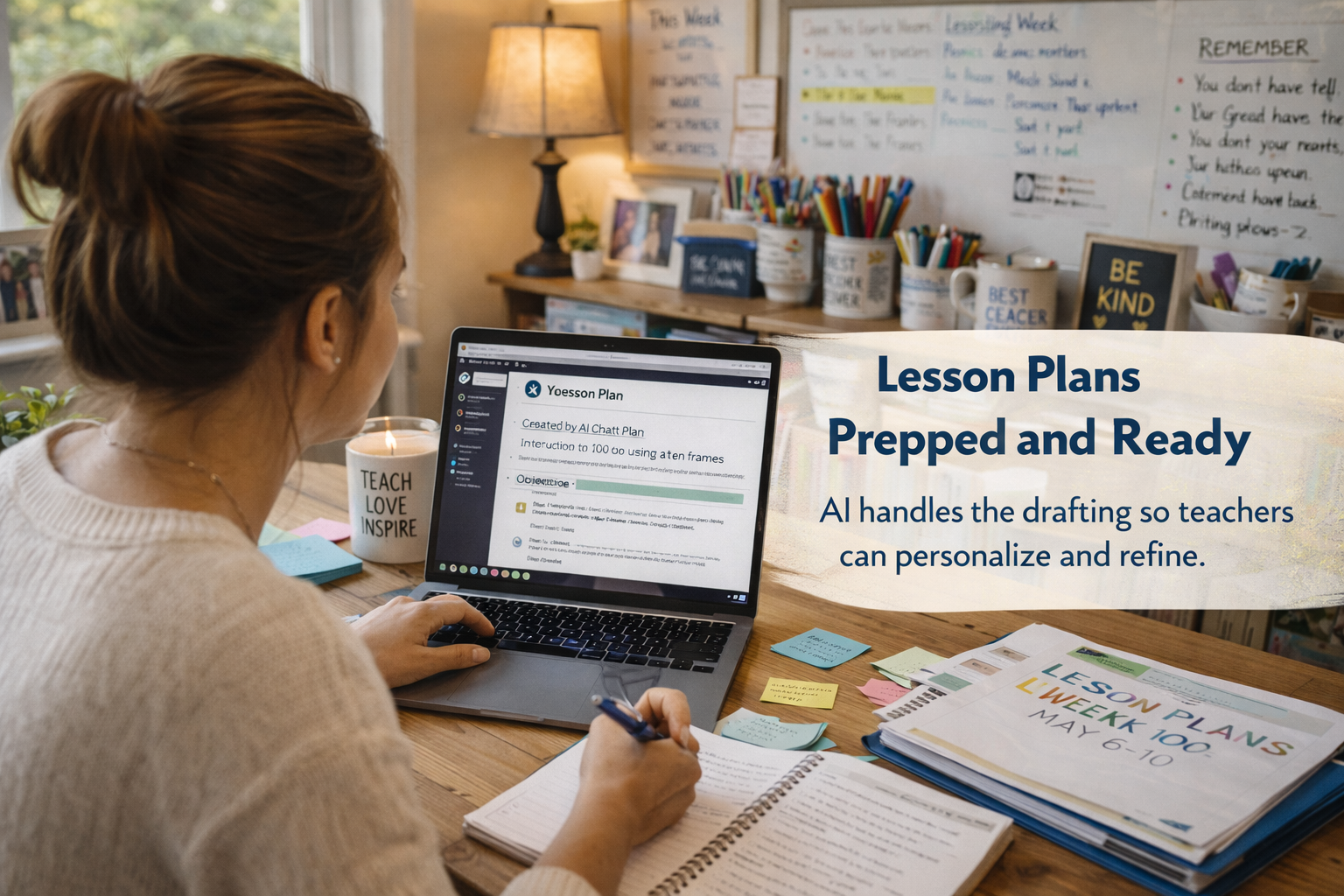
Instead of starting from a blank page, AI tools like ChatGPT, Claude, or Google Gemini can generate a complete lesson plan draft based on your specific standard, grade level, and learning objective — in under two minutes.
You describe what you want: "A 45-minute first grade math lesson on counting to 100 using ten frames, with a movement activity and a formative check." The AI builds the framework. You personalize it for your students.
Teachers report saving between 45 minutes and two hours per lesson plan when using AI this way — not because the AI does it all, but because starting from a solid draft is dramatically faster than starting from nothing.
2. Instantly Differentiate for Multiple Levels
One of the most time-consuming tasks in primary teaching is differentiation. Writing three versions of the same activity — one for your below-grade readers, one for on-level, one for advanced — can take nearly as long as writing the original lesson.
AI tools can differentiate a single activity for multiple reading levels in seconds. You paste in your original task, specify your levels (e.g., "Rewrite this for a student reading at a DRA 6 and a student reading at a DRA 20"), and the tool produces both versions instantly.
What used to take 30 minutes now takes 90 seconds.
3. Write Parent Communication That Sounds Like You — Not a Form Letter
Parent emails, newsletters, and behavior notes can pile up fast. AI tools let you describe what you want to communicate — "I need a warm but clear email to a parent about their child disrupting during transitions" — and generate a draft that you can review, tweak, and send.
You stay in control of the tone and the message. The AI just handles the drafting.
This is particularly helpful for sensitive communications, where finding the right words under pressure is stressful. Having a thoughtful draft to start from makes a meaningful difference.
4. Create Behavior Support Materials Without Starting From Scratch
Whether you need a simple behavior reflection sheet, a self-regulation check-in tool, or a visual classroom rules anchor chart, AI can generate the text and structure in moments. You describe the purpose and your students' developmental level, and the tool gives you a starting draft.
Teachers who use this approach consistently report that it's not about having the AI make their decisions — it's about skipping the blank-page paralysis that slows everything down.
5. Plan an Entire Week in One Sitting
Here's where things get genuinely powerful: AI tools can help you backward-plan an entire unit or week at once. You give it your end goal (the standard or skill students need to demonstrate), and it maps backward — building a sequence of lessons, activities, and checks for understanding that build logically toward that goal.
Experienced teachers have always done this kind of planning intuitively. AI just makes it possible to do it faster, with more structure, and with less mental exhaustion.

Why This Works: What Brain Research Actually Says
There's a reason teachers who start using AI tools describe feeling less depleted — not just time-wise, but cognitively.
A growing body of research on teacher burnout points to decision fatigue as one of the leading contributors to early attrition. Teachers make an estimated 1,500 decisions per school day — more than surgeons, air traffic controllers, or CEOs in comparable time frames. That is not hyperbole. That is a documented, peer-reviewed finding.
When AI handles the mechanical, generative parts of planning — drafting, formatting, differentiating, rewriting — it reduces the decision-making load before the school day even begins. Teachers start the day with more in the tank.
And here's what matters for your K–3 students specifically: young children are exquisitely attuned to the emotional state of their teacher. Research in co-regulation (the process by which a calm adult helps a dysregulated child find calm) shows that a teacher's nervous system is one of the most powerful regulation tools in the room.
When you're rested and resourced, you are a better co-regulator. That's not motivation language. That's neuroscience.
AI tools that reduce planning overwhelm aren't just about efficiency. They're about giving you back the energy that your students need from you.
You're Not Meant to Do This Alone
Teaching young children is some of the most complex work a human being can do.
You're not just delivering content. You're helping five and six and seven-year-olds learn how to be in a community — how to manage big feelings, how to solve problems, how to try hard things and keep going when it's difficult.
That work requires your full presence. Your warmth. Your attunement. Your judgment.
None of those things can be automated. But the planning tasks that drain your bandwidth before you even walk in the door? Those can be made dramatically easier.
AI tools won't make you a better teacher. You already are one. But they can make sure that teacher shows up for your students on Monday morning with something left in reserve.
You deserve that. And honestly? So do your kids.
A Place to Start
If you're curious about bringing more ease into your planning, this is where I'd encourage you to begin: my Lesson Plan Toolbox is built specifically for K–3 teachers who want practical, ready-to-use planning frameworks that fit the real rhythms of a primary classroom.
And if you want to go deeper on managing classroom behavior with less stress — especially when behavior challenges are taking up most of your mental energy — the Student Behavior Scenario Cards give you a quick, structured way to practice responding to common situations before they happen in real time.
Because the goal has always been the same: a calmer classroom, a less stressed teacher, and more space for the learning that matters.
One Thing to Try Tomorrow Morning
Before your first lesson tomorrow, try this: open an AI tool (Claude, ChatGPT, or Gemini — all have free versions), and type one sentence describing something you've been putting off planning. Just one lesson, one activity, one parent email.
See what comes back.
You don't have to use it exactly as written. But I'd be surprised if it doesn't save you at least twenty minutes — and remind you that you don't have to build everything from a blank page anymore.
Sometimes the smallest shift creates the most breathing room.
DID YOU KNOW…
Did you know I organize a FREE Facebook Group for Mastering Classroom Management? We are gearing up for our summer sessions, so if you’re looking for a simple way to improve your classroom management join the already 200+ teachers that have signed up: Mastering Classroom Management Facebook Group
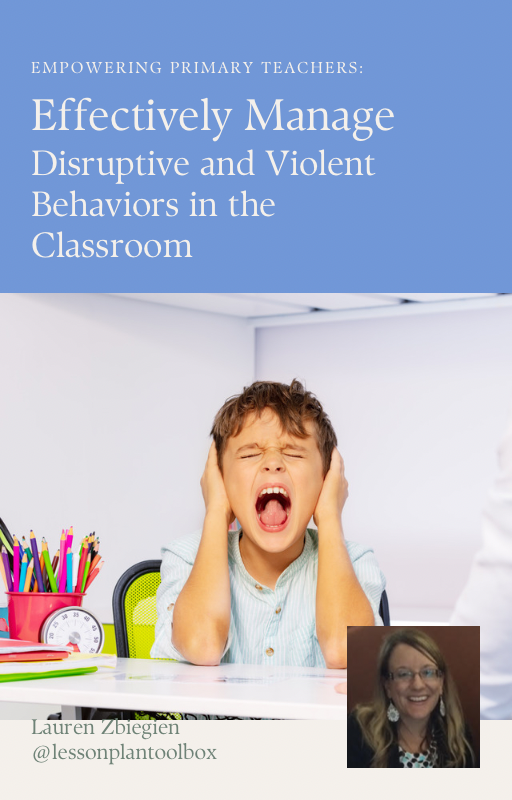
Your ebook GIFT: Empowering Primary Teachers: Effectively Manage Disruptive and Violent Behaviors in the Classroom
FINALLY…
If you enjoyed the tips in this post, you might also enjoy this series of Classroom Management by Design for Primary Teachers:
The Hidden Reason Some Students Can't Focus Before Lunch
Teaching Accountability to Young Students: A Practical Guide for K–3 Teachers
Unlock the Key to Supporting Neurodivergent Learners - Without Overwhelm
Finished Early? Now What? 10 Brilliant Ways to Keep Students Engaged Without the Chaos
A Guide to Creating an Intrinsically Motivated Classroom
Expanding AI's Role in the Primary Classroom
Unlock the Power of AI in the Primary Classroom
Supporting a Student Being Bullied
Don’t forget to follow us over on Instagram!
Teach~Relax~Repeat
Lauren
About Lesson Plan Toolbox
Lesson Plan Toolbox helps K–3 teachers build calm, structured, emotionally regulated classrooms through brain-based systems, movement integration, and ready-to-use behavior tools — so they can teach with confidence instead of stress. Founded by an educator with 20+ years of classroom and assistant principal experience.


