
Why Re-Teaching Classroom Routines in March is the Secret to Better Behavior and Calmer Classrooms
Welcome to our yearlong series on Classroom Management by Design for Primary Teachers. Each week we will give you a new piece to the classroom management puzzle to have in place when you need it this school year. Think of it as a Lego kit just waiting to be built.
Classroom Management by Design for Primary Teachers: Why Re-Teaching Classroom Routines in March Is the Secret to Better Behavior and Calmer Classrooms
Why going back to basics mid-year isn't a sign of failure — it's one of the most powerful classroom management moves you can make.
You're somewhere in the middle of the school year — the new-year energy has worn off, spring break feels just out of reach, and you find yourself doing something that makes you stop and wonder: you're re-teaching how to line up. Again. You're modeling how to transition from the carpet. Again. And somewhere in the back of your mind, a voice creeps in:
"Shouldn't they know this by now? What am I doing wrong?"
Take a breath. You are not doing anything wrong. In fact, you might be doing one of the most strategically sound things a classroom teacher can do.
The Myth of "They Should Know This Already"
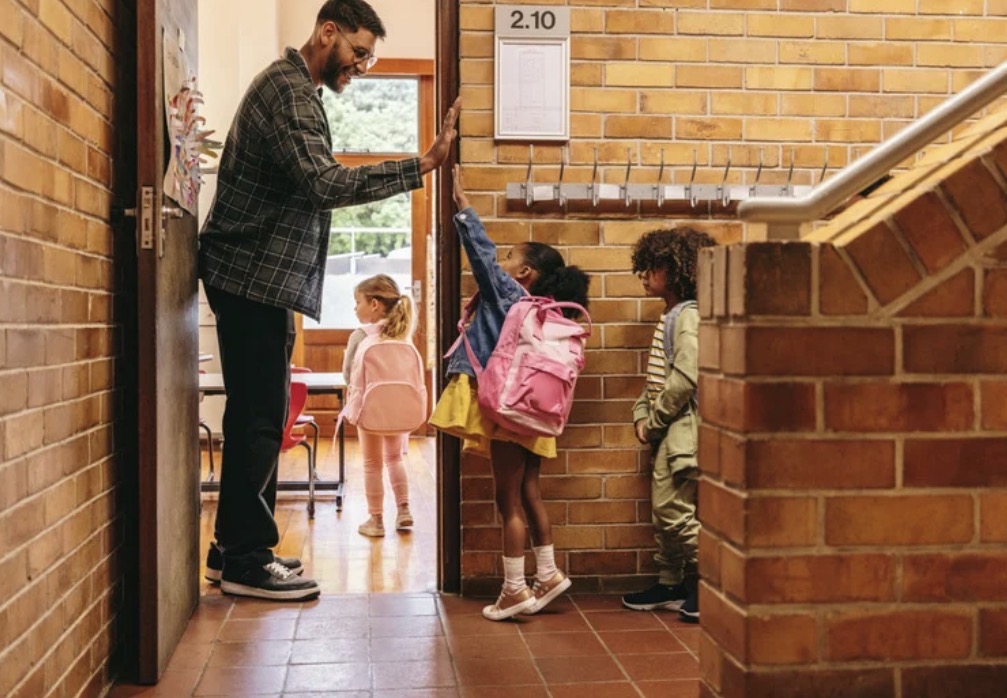
Here's what no one tells you in teacher prep programs: children — especially K–3 students — do not learn routines once and lock them in permanently. Their brains don't work that way.
Young children are still developing the executive functioning skills that allow them to follow multi-step procedures automatically. They need repetition, consistency, and — most importantly — re-teaching after any disruption to their routine.
Think about what your class has been through since August:
Holiday breaks that disrupted every rhythm you built
Substitute teacher days that (despite your best sub plans) shifted the energy in the room
Schedule changes, assemblies, and special events
The natural mid-year energy dip that affects both students and teachers
New students who joined after the year began
Every single one of those things is a nervous system disruption. And when a child's nervous system is dysregulated, routines — even well-practiced ones — fall apart.

What the Research Actually Says About Routine Repetition
Brain science backs up what experienced teachers know intuitively: procedural learning — the kind that makes routines automatic — requires repeated, consistent practice across varied emotional states. That means your students need to practice lining up when they're calm, when they're excited, when they're tired, and when they've just come in from a chaotic recess.
It also means that the "reset" you're doing in March isn't remediation. It's advanced teaching.
You are teaching your students something far more valuable than how to walk in a line: you are teaching them that structure is reliable. That the adult in the room is consistent. That even when things feel chaotic, there is a system that holds.
For many of your students — especially those in Title I schools or homes with unpredictable environments — your classroom routine may be the most stable system in their entire day.

Signs That a Mid-Year Routine Reset Is Exactly What Your Class Needs
Not sure if you're in "refresh mode" or "something is seriously off" territory? Here's how to tell the difference. A mid-year routine reset is the right move if you're noticing:
Transitions are taking significantly longer than they did in October
Students seem to "forget" procedures they mastered earlier in the year
The classroom feels louder, more scattered, or harder to redirect
You're relying more on reactive discipline than proactive structure
You feel drained by 10 AM and you can't quite explain why
That last one is important. Teacher energy is data. When you're exhausted by managing the environment instead of teaching in it, your classroom systems need attention — not more willpower from you.
How to Do a March Routine Reset Without Losing Momentum
The goal isn't to start over from scratch — it's to re-anchor the systems that already exist. Think of it as recalibrating, not rebuilding. Here's a simple framework:
1. Audit Before You Act
Before you start re-teaching everything, identify the two or three routines causing the most friction. Common culprits in March: morning arrival, transition between subjects, and end-of-day dismissal. Pick your highest-impact target first.
2. Name It With Your Students
Don't sneak the reset in. Tell your students directly: "I've noticed our [transition/morning routine/signal] has gotten off track. We're going to practice it together because I know we can do better." This is not a punishment framing — it's a leadership framing. You're modeling that strong people course-correct.
3. Practice It Like It's Day One — With March Energy
Model the routine again. Use the same level of specificity you used in August. Walk through it step by step. Then celebrate the execution. Older K–3 students sometimes resist this because they think it's "babyish" — your enthusiasm and genuine celebration of success dissolves that resistance fast.
4. Add a Movement Reset
Here's something most classroom management advice skips: if your students' bodies are dysregulated, no amount of re-teaching routines will stick. Build a 60–90 second movement break into your reset. A quick body shake-out, a walking lap around the room, or even a synchronized stretch sequence tells the nervous system it's safe to settle. Regulated bodies follow routines. Dysregulated ones can't — no matter how many times you've practiced.
5. Track Your Reset Over 5 Days
Give your reset a full week before you evaluate. Most teachers abandon a re-teaching effort after two days because the change isn't immediate. But behavior change — especially routine reinforcement — follows a curve. Day 1 is messy. Day 3 is noticeably better. Day 5 feels like a new normal.

A Word to the Teacher Who Feels Behind
If you searched "is it normal to still be working on classroom routines in March" — first of all, yes, it absolutely is. And second: the fact that you're asking that question means you haven't given up. You're still invested. You still care about the quality of your classroom environment.
The teachers who stop caring are the ones who stop noticing. You noticed. That's not a failure — that's the foundation of everything.
Classroom management isn't a skill you master once in August and coast on for the rest of the year. It's a living system that you tend to — week by week, month by month. The most effective teachers aren't the ones who get their class "trained" by October and never look back. They're the ones who stay attuned to their classroom's energy and respond to what they see.
You are one of those teachers.

Ready to Reset? Here's Your Next Step
If you're in the middle of a March rough patch and you need more than a pep talk — you need actual tools — the Lesson Plan Toolbox was built for exactly this moment. Inside, you'll find:
Daily behavior scenario cards to sharpen your classroom decision-making
Movement-based transition strategies designed to regulate before you redirect
The 4 Question Method for responding to behavior without losing your calm
Step-by-step systems built for K–3 classrooms specifically
You don't have to white-knuckle your way through the rest of this school year. There's a calmer, more structured version of your classroom waiting — and it starts with the right tools and the knowledge that what you're doing in March is not only normal, it's exactly right.
→ Explore the Lesson Plan Toolbox and find the support your classroom deserves.
Manage Student Behavior in 5 Minutes a Day!
Do you see student behavior going through the roof right about now?
Have you tried EVERYTHING and NOTHING seems to work?
Trust me, I've been there!
This is EXACTLY why I created The Student Behavior Scenario of the Day Cards for primary teachers. You will improve student behavior AND your classroom management in just 5 minutes a day!
As teachers, we can't assume that students know how to behave or what is expected of them and so often that is where things go wrong for us. (We all know what happens when we ''assume", but yet we still do it anyway.)
These cards changed EVERYTHING for me in the primary classroom because students LOVE talking about behavior AND they want to meet your expectations.
Best of all, each card has scenario of the day, reflection questions, and possible consequences that teachers can use in each situation.
GRAB YOUR FREE SAMPLE HERE: Student Behavior Scenario of the Day Cards
DID YOU KNOW…
Did you know I organize a FREE Facebook Group for Mastering Classroom Management? We are gearing up for our school year quarter sessions, so if you’re looking for a simple way to improve your classroom management join the already 200+ teachers that have signed up: Mastering Classroom Management Facebook Group
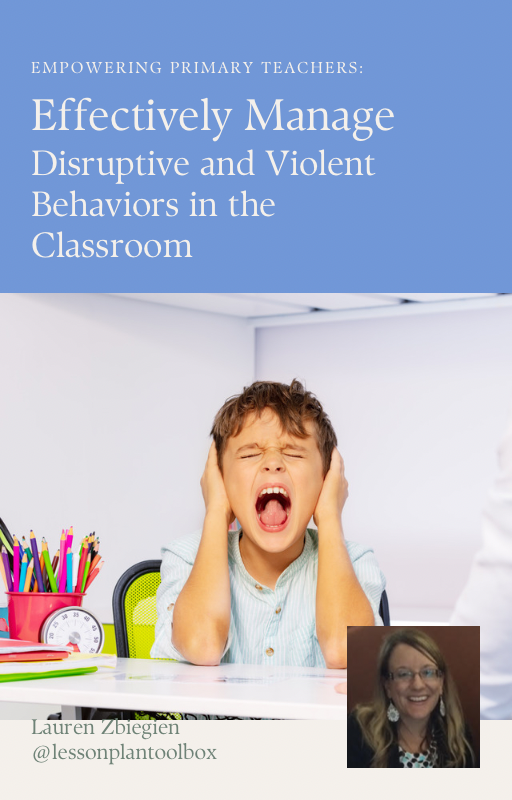
Your ebook GIFT: Empowering Primary Teachers: Effectively Manage Disruptive and Violent Behaviors in the Classroom
FINALLY…
If you enjoyed the tips in this post, you might also enjoy this series of Classroom Management by Design for Primary Teachers:
The Hidden Reason Some Students Can't Focus Before Lunch
Teaching Accountability to Young Students: A Practical Guide for K–3 Teachers
Unlock the Key to Supporting Neurodivergent Learners - Without Overwhelm
Finished Early? Now What? 10 Brilliant Ways to Keep Students Engaged Without the Chaos
A Guide to Creating an Intrinsically Motivated Classroom
Expanding AI's Role in the Primary Classroom
Unlock the Power of AI in the Primary Classroom
Supporting a Student Being Bullied
Don’t forget to follow us over on Instagram!
Teach~Relax~Repeat
Lauren
About Lesson Plan Toolbox
Lesson Plan Toolbox helps K–3 teachers build calm, structured, emotionally regulated classrooms through brain-based systems, movement integration, and ready-to-use behavior tools — so they can teach with confidence instead of stress. Founded by an educator with 20+ years of classroom and assistant principal experience.


