Write Better Parent Messages Faster: 5 AI Strategies Teachers Will Love
Write Better Parent Messages Faster: 5 AI Strategies Teachers Will Love
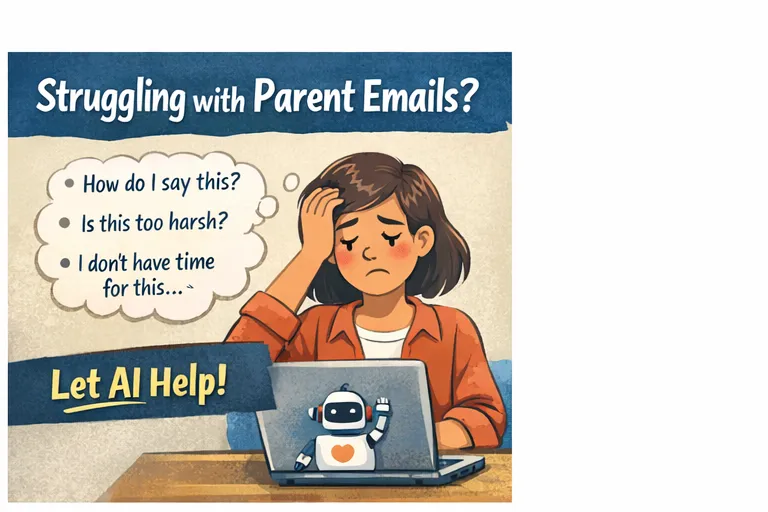
It's 3:42 p.m. And you're still not done.
The kids are gone. The room is quiet. You should feel some version of relief right now.
But instead, you're staring at a blinking cursor, trying to figure out how to word that email. The one about the behavior situation from this morning. The one where you need to be honest, but also kind, and also professional, and also not accidentally make the parent feel like you're attacking their kid.
You've rewritten the first sentence four times.
You know what you want to say. You just can't seem to say it.
Here's what I want you to know: this isn't a you problem. This is a mental load problem. And more teachers than you realize are sitting at their desks doing the exact same thing right now.

The Part Nobody Talks About
We spend a lot of time talking about what to say to parents. But we don't talk nearly enough about how exhausting it is to figure out how to say it.
Every parent message — even a simple one — asks something of you. You have to manage your own emotions first. Then find the right tone. Then think about how it might land. Then protect the relationship, even when you're sharing hard news.
That's not just communication. That's emotional labor. And doing it at the end of an already-full day is genuinely hard.
This is why I've become such a believer in using AI as a support tool — not to replace your voice or your judgment, but to give your tired brain a starting point. Think of it like having a quiet assistant beside you who helps you get the words out faster, so you can go home sooner.
What This Could Actually Look Like
Picture this: it's end of day, and you have two parent messages to send. One is a positive check-in. The other is a behavior concern you've been dreading a little.
Instead of opening a blank email and staring at it, you open AI and type a few messy, honest notes about what happened. Within seconds, you have a draft — clear, kind, professionally worded. You read it, tweak one or two things to make it sound more like you, and hit send.
Both messages done in under ten minutes. That's not magic. That's just a smarter way to work.
5 ways to use AI for parent communication (that actually feel good)
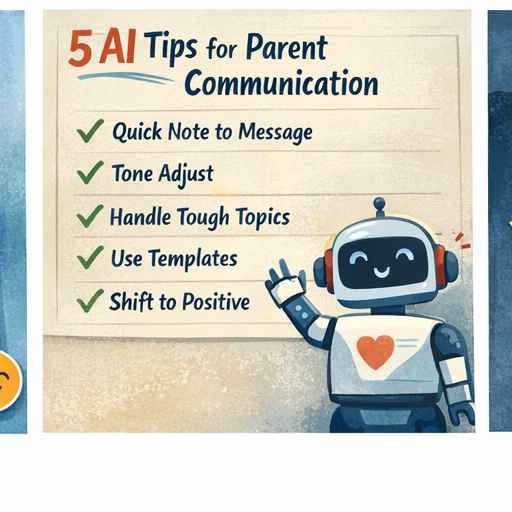
1. Brain Dump First, Polish Later
The hardest part of writing anything is the blank page. So stop trying to write a perfect message right away — just tell AI what happened, the way you'd tell a colleague in the hallway.
Try this prompt
"A student kept talking during math today, distracted others, needed multiple reminders. Help me write a kind, clear message to send home."
You give AI the raw material. It gives you a structured draft. Then you make it yours.
Or try this version for a first-time concern
"This is the first time I'm reaching out about this student's behavior. Write a warm, non-alarming message that opens the door for partnership."
For a repeated issue
"This is an ongoing concern I've mentioned before. Help me write a message that's firm but still collaborative and solution-focused."
This one shift alone can cut your message-writing time in half.
2. Let AI Carry the Tone When You're Emotionally Done
Some days, a situation gets under your skin a little. Maybe a behavior was repeated for the third time this week. Maybe you're genuinely frustrated. That's human. But it also means this probably isn't the moment to write the email yourself, unassisted.
Try typing your honest thoughts into AI first — even the frustrated version — and then ask it to reframe.
Try this prompt
"Here's what I want to say: [paste your draft]. Rewrite this to sound calm, professional, and collaborative — without losing the key message."
Or for softening a harsh first draft
"Rewrite this message to sound more warm and supportive, while still being direct about the concern."
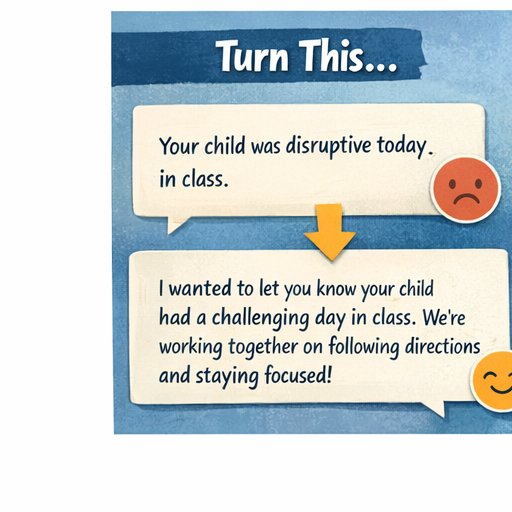
Before: "Your child was disruptive and did not follow directions."
After AI helps: "Today was a bit of a challenging day for your child during instruction. We're working on some focusing strategies together, and I wanted to keep you in the loop."
Same information. Completely different energy. And the relationship stays intact.
3. Use AI to Help with the Heavy Ones
The behavior concern that's been building for weeks. The situation that involves more than just one incident. The message you've been putting off because you genuinely don't know how to start.
These are the messages that sit in the back of your mind all evening if you don't handle them. AI can help you structure them with care — keeping the focus on the student's growth, avoiding blame, and positioning you and the parent as a team.
Try this prompt
"Help me write a respectful message to a parent about ongoing behavior concerns. I want to maintain a positive tone, offer support, and suggest we connect for a conversation."
When emotions have already run high with this family
"This parent and I have had some tense exchanges. Help me write a message that resets the tone — professional, warm, and focused on what's best for the student."
When you need to document and communicate at the same time
"Write a parent message summarizing today's incident that I can also use as documentation. Keep it factual, calm, and specific."
You'll still bring your own warmth and knowledge of the child. But you won't have to build the scaffold from scratch.
4. Build Templates Once, Use Them All Year
Here's something a little game-changing: once you find a message structure you love, you don't have to reinvent it every time.
Ask AI to help you create reusable templates for the kinds of messages you send most often — behavior updates, positive shoutouts, academic check-ins, reminder notes. Save them somewhere easy to find. When the situation comes up again (and it will), you copy, personalize two or three details, and send.
Try this prompt
"Create a reusable template for a minor classroom behavior concern. Leave blanks where I can fill in the student's name, specific behavior, and date."
For a set of templates at once
"Create 3 parent message templates: one for a minor behavior concern, one for a positive update, and one for requesting a check-in meeting. Keep all three warm and professional."
What used to take fifteen minutes takes two. And it still sounds like you, because you shaped the template in the first place.
5. Lead with Something Good
This one is small, but it changes everything about how a message lands.
Before you send a concern home, ask AI to help you open with something true and positive about the student. A moment of effort you noticed. A strength they showed earlier in the day. A genuine thing you appreciate about them.
It doesn't minimize the concern — it actually makes parents more receptive to hearing it, because they don't feel like you're coming after their kid. They feel like you see their kid.
Try this prompt
"Rewrite this message to open with a genuine strength or positive moment before sharing the concern. Keep it honest — not forced."
When you're struggling to think of something positive
"Help me think of ways to open a difficult parent message with a genuine positive — even when it's been a hard week with this student."
And honestly? It reminds you of something good too, on the hard days.
Why Your Brain Needs This
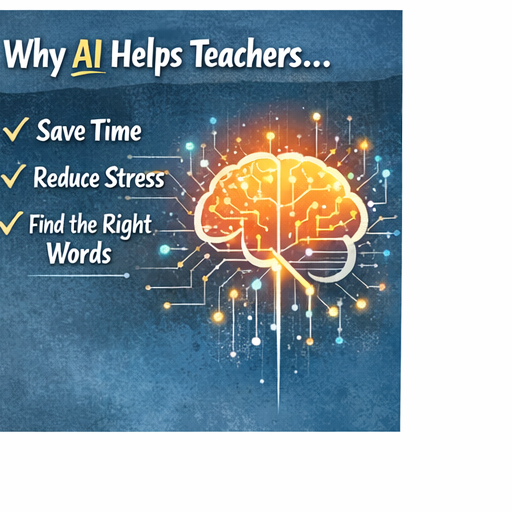
When you're running on empty, your brain naturally looks for shortcuts. Decision-making gets harder. Words that usually come easily start to feel stuck.
AI works because it gives you a starting point. And a starting point is often all your brain needs to get back in gear. You're not outsourcing your thinking — you're just reducing the friction so your real thinking can happen faster.
Your voice is still in every message. AI just helps you find it quicker
Your AI Parent Message Prompt Bank
Save this. Screenshot it. Bookmark this page. These are ready to copy and paste whenever you need them.
Behavior concerns
"Write a kind, clear message to a parent about a student who struggled with [behavior] during [subject/time of day]."
"Help me write a message about a repeated behavior concern that's firm but still collaborative and solution-focused."
"Write a message summarizing today's behavior incident that is factual, calm, and can also serve as documentation."
"Help me write a message that addresses an ongoing concern while keeping the tone warm and the focus on student growth."
Tone adjustments
"Rewrite this message to sound more calm and collaborative: [paste draft]."
"Soften the tone of this message without removing the key concern."
"Rewrite this to sound professional but warm — not stiff or cold."
"This parent and I have had some tension. Help me write a message that resets the tone and focuses on the student."
Positive messages
"Write a short, warm message to a parent celebrating a positive moment their child had today."
"Help me write a genuine, specific positive update that will make a parent smile when they read it."
"Rewrite this concern-focused message to open with a true and specific positive before sharing the issue."
Templates & meeting requests
"Create a reusable parent message template for [minor behavior / academic concern / positive update]. Leave blanks for the student name, date, and specific details."
"Help me write a friendly message requesting a brief check-in with a parent — in person, by phone, or via email."
"Write a follow-up message thanking a parent for meeting with me and summarizing what we agreed to try."
Quick starters (when you're really stuck)
"Here's what happened today: [describe situation]. Help me turn this into a clear, kind parent message."
"I need to contact a parent but I'm not sure how to say this. Here's the situation: [describe]. What's the best approach?"
"I've been putting off writing this message. Help me just get started: [describe the situation briefly]."
A Note, Teacher to Teacher
You are already doing so much. You're managing a room full of little humans, holding space for their emotions, delivering instruction, noticing who's struggling, celebrating who's growing — and then doing the invisible work of keeping families in the loop too.
If parent communication has ever felt heavy, that's not a sign you're doing it wrong. That's a sign you care deeply and you're carrying a lot.
Using tools that make the job more sustainable isn't cutting corners. It's taking care of yourself so you can keep showing up for your kids.
One Small Thing to Try Tomorrow
Before you write your next parent message — just try typing your thoughts into AI first. Don't overthink the prompt. Don't try to be fancy about it. Just tell it what happened and what you want to say, and see what comes back.
One small shift. That's all.
Because the teachers who feel the calmest at the end of the day aren't always the ones with the easiest classrooms. They're often the ones who've learned to work smarter — and who've given themselves permission to ask for a little help along the way.
You deserve that too.
DID YOU KNOW…
Did you know I organize a FREE Facebook Group for Mastering Classroom Management? We are gearing up for our summer sessions, so if you’re looking for a simple way to improve your classroom management join the already 200+ teachers that have signed up: Mastering Classroom Management Facebook Group
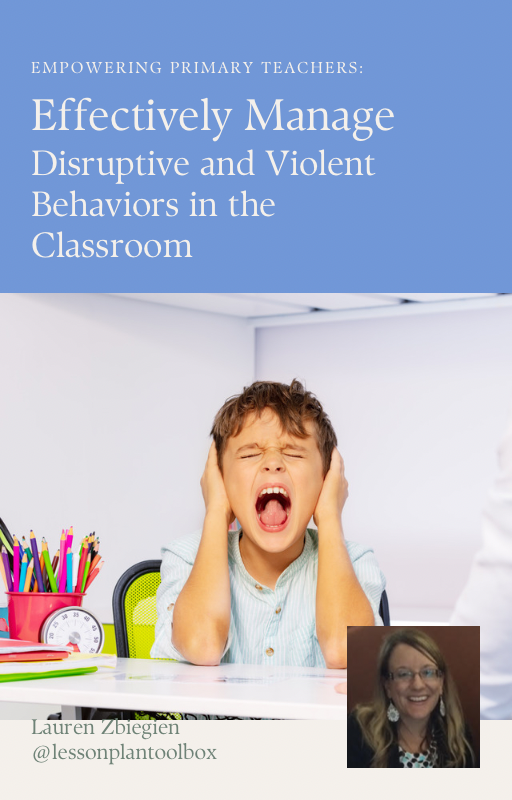
Your ebook GIFT: Empowering Primary Teachers: Effectively Manage Disruptive and Violent Behaviors in the Classroom
FINALLY…
If you enjoyed the tips in this post, you might also enjoy this series of Classroom Management by Design for Primary Teachers:
The Hidden Reason Some Students Can't Focus Before Lunch
Teaching Accountability to Young Students: A Practical Guide for K–3 Teachers
Unlock the Key to Supporting Neurodivergent Learners - Without Overwhelm
Finished Early? Now What? 10 Brilliant Ways to Keep Students Engaged Without the Chaos
A Guide to Creating an Intrinsically Motivated Classroom
Expanding AI's Role in the Primary Classroom
Unlock the Power of AI in the Primary Classroom
Supporting a Student Being Bullied
Don’t forget to follow us over on Instagram!
Teach~Relax~Repeat
Lauren
About Lesson Plan Toolbox
Lesson Plan Toolbox helps K–3 teachers build calm, structured, emotionally regulated classrooms through brain-based systems, movement integration, and ready-to-use behavior tools — so they can teach with confidence instead of stress. Founded by an educator with 20+ years of classroom and assistant principal experience.


